
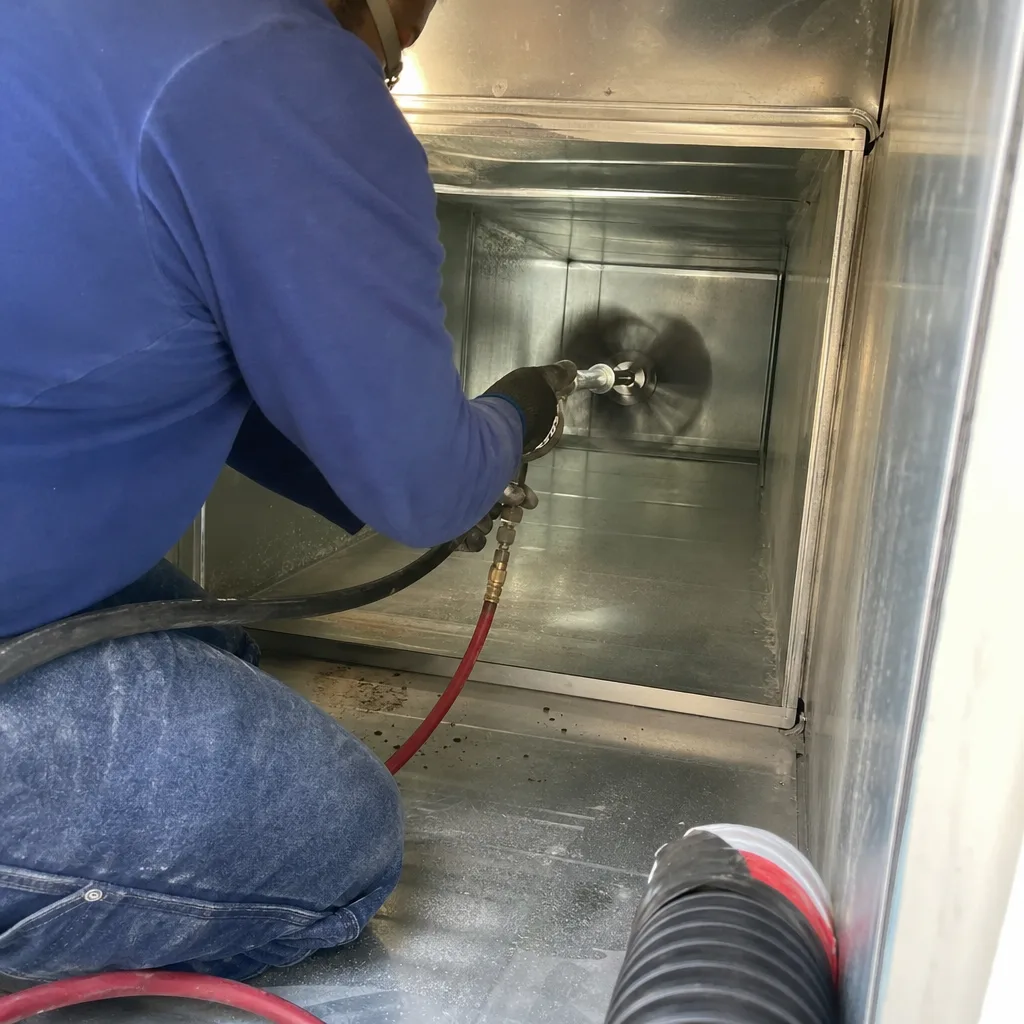
Last updated November 15, 2026
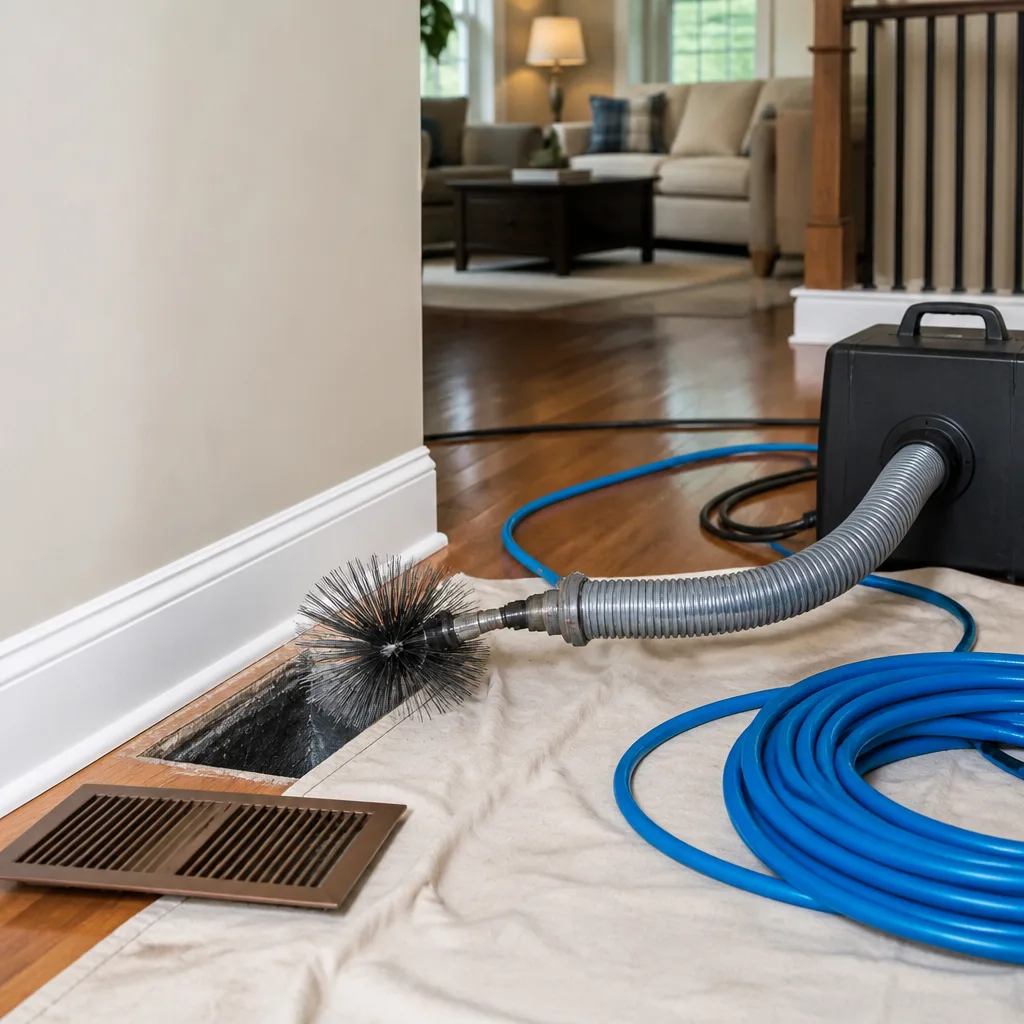 Whole-home duct cleaning
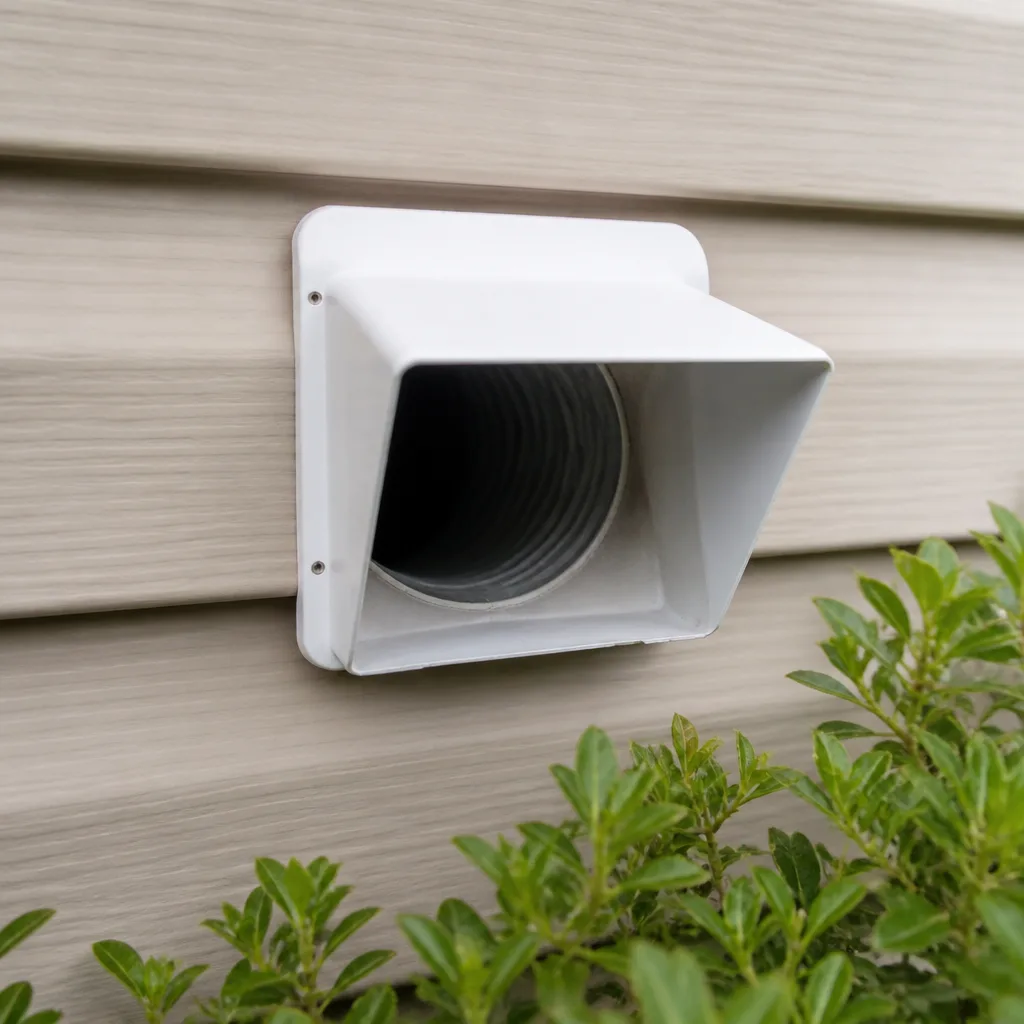 Dryer vent cleaning
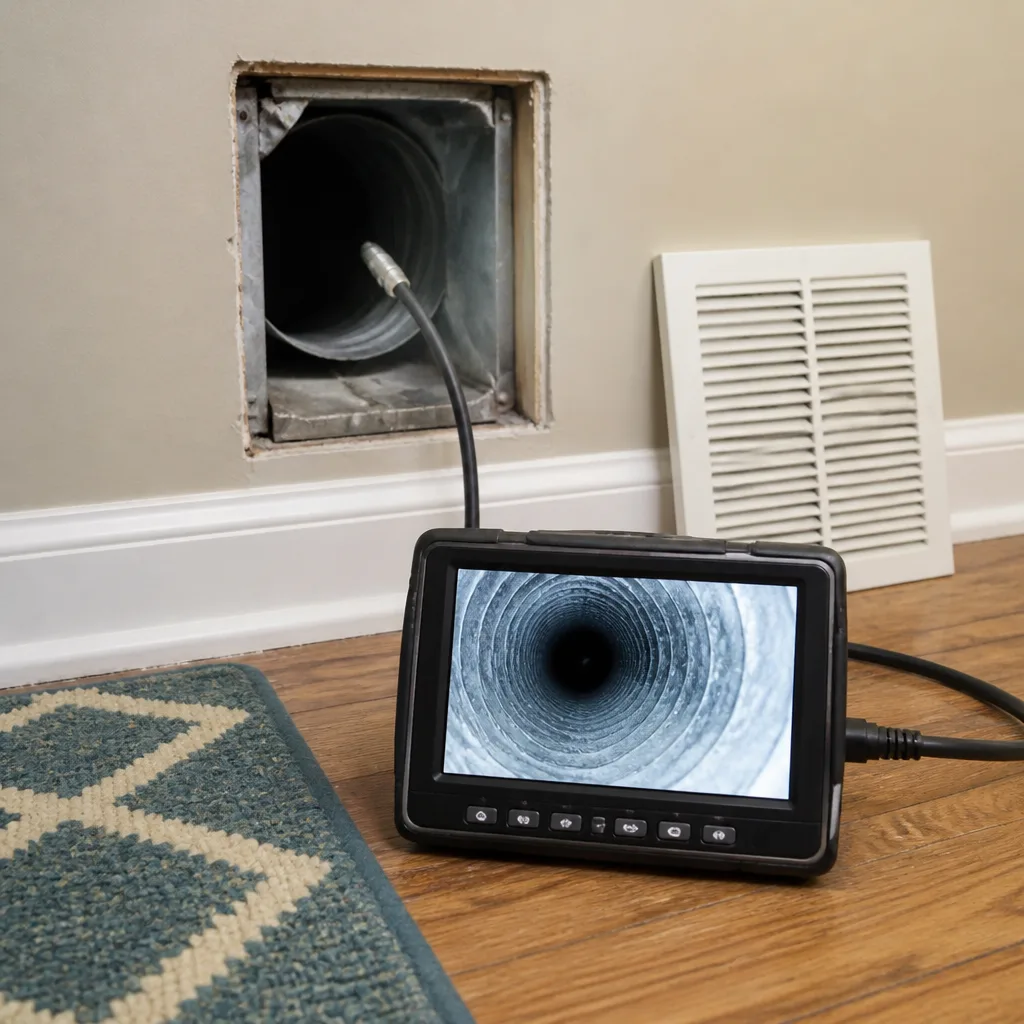 Camera inspection
 Sanitizing & deodorizing
Whole-system duct and dryer vent check with before-and-after photos - you see exactly what came out of your vents
That "$99 whole-house special" is a bait ad - the real number appears once they are in your hallway, or the "clean" is a shop-vac at the register. We photograph the inside of your ducts before and after instead.
Air Duct Cleaning Troubleshooting in Brownsville: Common Problems and How to Fix Them
If cleaning your ducts didn’t fix the musty smell or the uneven airflow in your home, the ducts probably weren’t the problem. And a second cleaning won’t be either. In our experience across Brownsville, most of what homeowners describe as “dirty duct symptoms” traces back to one of three diagnosable failures: a collapsed run of flex duct, a blocked return, or an air handler that’s pulling return air from the attic instead of the living space. Each one mimics debris buildup almost perfectly, which is why so many people pay for a cleaning that can’t possibly help. This guide walks you through reading the actual warning signs yourself, in order, before you spend another dollar. You’ll learn what Brownsville’s attic heat does to flex duct, how to tell a dirt smell from a moisture smell, and how to verify any duct work afterward.
Quick Answer
Air duct cleaning doesn’t fix air quality problems when the real cause is a mechanical fault: crushed or disconnected flex duct in the attic, a return path that’s blocked or undersized, or a breached air handler cabinet pulling hot attic air into the system. In Brownsville’s split-system homes, the tell is usually which rooms stay hot and whether the smell is dry and dusty or damp and musty. Cleaning removes debris; repair restores the system. Diagnosing which one you need comes first, and that diagnosis is free.
Styles & brands we work with
- Whole-home duct cleaning
- Dryer vent cleaning
- Camera inspection
- Sanitizing & deodorizing
Table of Contents
- What Are the Real Symptoms of a Duct Problem vs. an Equipment Problem?
- How Do You Test Airflow at the Registers Yourself?
- Why Does Collapsed Flex Duct Mimic Dirty Ducts in Brownsville Attics?
- Is the Smell Dirt or Is It Moisture and Mold?
- Why Are Some Rooms Always Hot When Others Are Fine?
- How Does a Blocked Return Starve the Whole System?
- How Do You Verify Duct Cleaning Actually Worked?
- How Do You Keep the System Healthy Between Cleanings?
What Are the Real Symptoms of a Duct Problem vs. an Equipment Problem?
The fastest way to separate a duct issue from an equipment issue is to notice whether the problem is about air quantity or air condition. Ducts are the delivery network. They don’t cool the air, they move it. So if the air coming out of a register is the right temperature but there’s too little of it, you’re looking at a duct problem: a kink, a leak, a blocked path, a disconnected boot. If the volume is fine but the air isn’t cold enough, or the system short-cycles or never satisfies the thermostat, the fault usually sits in the equipment: refrigerant charge, a failing blower, a dirty evaporator coil, a thermostat issue.
There’s overlap, which is what confuses people. A duct system leaking badly in a Brownsville attic pulls in 130-degree-plus summer air. The equipment is working exactly as designed, and the house is still uncomfortable. That’s not a cooling failure, it’s a distribution failure, and you can’t fix it by replacing the condenser.
Here’s the shorthand we use:
- Hot air, weak flow from every vent: usually return-side restriction or a failing blower.
- Cold air, weak flow from one or two vents only: almost always a duct problem on that branch.
- Strong flow, air not cold: equipment, not ducts.
- Strong flow, musty or dusty smell: duct interior, moisture, or a return pulling from a dirty space.
- Strong flow, cold air, but the house never gets comfortable: leakage, ducting in an unconditioned space, or an undersized system.
Notice how different those answers are. That’s the entire case for diagnosing before quoting. If someone offers to clean your ducts before asking which vents are weak, they haven’t asked the only question that matters.
How Do You Test Airflow at the Registers Yourself?
You can feel the difference between a healthy branch and a starved one without any tools. The trick is to compare registers against each other instead of judging any single one in isolation, and to do it in the middle of the cooling season when Brownsville heat is loading the system hard.
- Start the system and let it run 10 minutes. The air handler needs to stabilize before you judge flow.
- Walk to each supply register and hold the back of your hand about an inch from the grille. You’re feeling for volume, not temperature. Note which ones feel “blowing hard” and which feel “barely whispering.”
- Tissue test the weak ones. Hold a single ply of tissue near the grille. If it droops or flaps faintly, that branch is starved. If it snaps out flat against the grille, that branch is delivering.
- Do the same at the return grille. A strong supply system can’t move air through a smothered return. If the return feels weak compared to the sum of the supplies, the problem is on the return side.
- Write down which rooms correspond to the weak vents. A pattern of “all the far rooms are weak” points to a trunk or branching problem. One random weak vent points to a single crushed or disconnected branch.
- Note the temperature of the air, not the volume. A vent that blows cold air weakly is a path restriction. A vent that blows weakly and feels almost room temperature might be disconnected entirely and dumping into the attic.
That’s the ceiling of what gauges-free testing can tell you. Actually measuring static pressure, checking for leaks at the plenum, and inspecting duct interior surfaces takes a manometer and an inspection camera. Homeowners get to the right question with their hand and a tissue; a technician gets to the right answer with equipment.
Why Does Collapsed Flex Duct Mimic Dirty Ducts in Brownsville Attics?
Flex duct is a spring coil wrapped in plastic with insulation around it. It’s cheap, quick to install, and the default choice in most Brownsville residential duct systems. It’s also fragile in ways that show up specifically in a hot attic.
Two things happen up there. First, the attic itself routinely reaches temperatures well above 130 degrees in Brownsville summer. The inner plastic liner softens, sags between supports, and can begin to separate from the coil. Second, any kink, tight turn, or long unsupported span becomes a permanent restriction once the duct sags into it. What starts as a mild bend becomes, over a few seasons, a near-total blockage.
Here’s why it matters that you know this:
- Collapsed flex duct restricts airflow exactly like debris blockage. The symptom is identical: a weak vent. Cleaning the inside of the duct removes dust and leaves the collapse intact. The vent is still weak.
- Flex duct can kink at the plenum connection and nobody sees it. If the run leaves the air handler at a tight 90-degree bend and then a 45, that span is squeezed the entire time.
- It can also disconnect at the boot. The outer plastic pulls away from the register boot and the supply dumps cold air into the attic. The vent inside feels weak and, if you touch it, lukewarm. That’s not dirt, that’s lost air.
- Sun-baked attic plastic cracks. The outer vapor jacket becomes brittle with age and heat and starts to split. The insulation loses effectiveness and the duct begins to sweat on the interior in humid months.
This is why we offer air duct repair alongside cleaning. Just cleaning a system with a crushed flex run and three disconnected boots is a job done on the wrong problem. We clean, repair, and protect, and a proper inspection before cleaning tells us which of those you actually need.
Is the Smell Dirt or Is It Moisture and Mold?
Those two smells are not the same, and they don’t have the same fix. This is the section most homeowners wish they’d read before scheduling a cleaning, because cleaning the ducts of a home with active mold growth on surfaces inside the system doesn’t fix the mold. It may spread spores.
Here’s how the two present:
- A dirt or dust smell is dry, dull, and gets stronger when the system first kicks on after sitting. It fades within minutes. It’s the smell of settled particulates being lifted back into the airstream. Cleaning addresses this.
- A musty or mildew smell is damp, sour, and persistent. It doesn’t fade. It’s strongest when the system has been running in humid weather and weakest when the house is dry. That’s a moisture signature.
- A “wet attic” smell is sharper and claylike, and it usually accompanies a visible sign: stained insulation, watermarks on the air handler cabinet, or a puddle in the drain pan. That’s a water source, not a duct surface.
- A chemical or solvent smell is a different category entirely. Never assume duct cleaning will fix a chemical smell. Investigate the source before you run the system again.
In Brownsville, the mold question is about humidity and drainage, not cold weather. When the indoor humidity climbs and the condensate drain starts clogging, water collects at the air handler, in the drain pan, and on the evaporator coil. That moisture can feed growth that then circulates through the system. Cleaning the ducts pulls debris off the metal. It does not kill active growth, does not stop a water source, and does not remediate a contaminated surface. If we smell moisture, we tell you, and the answer is usually to fix the water source and use proper containment equipment like Abatement Technologies negative-air units during any work, so spores don’t get pushed into the rest of the home.
Why Are Some Rooms Always Hot When Others Are Fine?
Uneven room temperature in Brownsville split-system homes is usually a duct leakage problem at the joints, not a debris problem. That’s the single most common root cause we find behind homeowner complaints about “the back bedroom never cools.”
The physics are simple. Every joint, every connection, every mastic seal you don’t have is a place where air leaves the duct. If that joint is in the attic, the lost air is hot attic air that goes nowhere useful. The room at the end of that branch gets a fraction of what it needs, the thermostat reads fine because the thermostat is in the main hallway, and the far room sits warm all summer. Cleaning the duct doesn’t seal the joint.
The three failure patterns we see most often in Brownsville homes:
- Leaking trunk joints. The main trunk behind the air handler has gaps where sections are joined with tape that’s aged out. Every gap bleeds. The room at the far end of the longest branch is the one that pays.
- Undersized return path. A home with one central return trying to serve a house with doors closed in every bedroom starves the system. Each closed door is a closed valve. The bedrooms you need to cool get starved because the hallway has to be pulled under pressure first.
- Disconnected branch boots. A flex run to a far register pulls away at the boot behind the drywall. The register is technically connected but barely delivers because the actual duct isn’t.
Any of these will survive a cleaning and still be wrong, which is why a pre-cleaning inspection with a camera in the duct and a manometer at the plenum is not optional for us. And for the equipment side of the air-quality story, it’s why we work with Honeywell and Aprilaire products, because balancing air quality across an uneven house sometimes means treating filtration and humidity alongside the ductwork itself.
How Does a Blocked Return Starve the Whole System?
A forced-air system moves air in a loop. Pull air out of the rooms through returns, condition it, push it back through supplies. Break either half and the whole loop suffers. In Brownsville homes, we find more blocked and undersized returns than any other single restriction.
A blocked return presents in several ways:
- Whistling or a high-pitched squeal at the return grille. The system is pulling air through a gap that’s too small, and the sound is the pressure drop.
- Filter collapsing inward. If your filter is bowing or sucked backward against the grille, the return is under-sized or partially blocked. Check for a filter installed the wrong way, a filter pleat that’s filled, or an old filter that was shoved up inside the return beside the current one.
- Every vent in the house feels weak at the same time. That’s the tell. A single weak vent is a branch problem. Weak everywhere points to the return.
- Furniture or a rug covering the return. Sounds obvious. It’s common. Look before you call.
Fixing a return isn’t a cleaning task. Sometimes it means removing an obstruction. Sometimes it means adding return capacity. Sometimes it means telling the homeowner to keep bedroom doors cracked during cooling hours until a proper path is installed. Whatever the fix, the point is that no amount of debris removal will fix a supply system trying to blow against a smothered return.
How Do You Verify Duct Cleaning Actually Worked?
You verify the job by checking both airflow and visible surfaces, and by asking for photos of the interior surfaces before and after. That last part matters because duct cleaning is one of the trades where you can’t see the finished work unless you make the technician show it.
This is our post-cleaning checklist. It works for any professional you hire:
- Register airflow comparison. Before the cleaning, note which vents are strong and which are weak using the tissue test above. After the cleaning, repeat it. Every vent should still register the same pattern. Cleaning does not restore airflow to a collapsed branch, so if the weak one is still weak, the cleaning was correctly performed but the diagnosis was incomplete. That’s a repair conversation, not a cleaning conversation.
- Visual spot check behind a register. Pull the register grille off one supply and one return (with the system off) and look inside. You should see clean sheet metal or clean flex liner, not a film of dust. Bring a small flashlight.
- Ask for before-and-after photos of the interior. This is the same standard used in abatement and remediation work. A proper cleaning has photo documentation. If your technician can’t produce it, you can’t verify the work happened.
- Confirm the equipment. Rotobrush contact-cleaning systems agitate and remove the dust film off the duct surface. Nikro HEPA vacuum equipment captures what’s loosened. Together they don’t just blow the dust around. Ask what equipment is coming into your home. A shop vac and a hose is not the same thing.
- Check the containment. Professional work uses negative-air equipment so the cleaning doesn’t redistribute dust into your living space. If there’s no containment, dust is going somewhere.
- Run the system and smell the air. A dirt smell should be gone. A moisture smell should not be, and if it’s still there, it’s a moisture problem and needs a different fix.
If you book a cleaning with us and ask for verification photos, that’s the standard, not a special request. It’s also the reason we work with Guardsman surface protection during the job, because a proper cleaning shouldn’t leave a trace in your home beyond cleaner air.
How Do You Keep the System Healthy Between Cleanings?
The best prevention in Brownsville is to keep the return breathing, change the filter on the filter’s schedule rather than a calendar guess, and address drainage before it becomes a moisture problem. Everything else is secondary.
- Change the filter based on pressure, not weeks. A clogged filter is a blocked return. If you can hold it to a light and see through it, it’s still passing air. When light stops coming through, it’s done. Every HVAC system has its own filter-change schedule depending on filter thickness and duty cycle.
- Keep the return unobstructed. No rugs, no furniture, no boxes stacked in front of the return grille. It sounds trivial. It happens constantly.
- Watch the condensate drain. A slow drain or a small puddle at the air handler is the early sign of the moisture problem that eventually becomes a musty smell. Address the drain early.
- Close the house’s humidity path. Running the bath fan and the kitchen exhaust when you’re generating moisture keeps that humidity out of the return air. In a Brownsville summer, that’s the difference between dry and damp duct surfaces.
- Have the system inspected, not just cleaned. A cleaning without an inspection misses the collapse, the disconnect, and the leak. Ask for an inspection every time.
- Treat the dryer vent as its own risk. Dryer vent cleaning isn’t a footnote to duct cleaning. It’s a fire-safety task with its own urgency and its own equipment, and it belongs on the same maintenance calendar as everything else in the duct system.
For a broader look at the cleaning side of the story, our air duct cleaning guide covers what a proper full-system cleaning involves. For the dryer side, the dryer vent cleaning page goes deeper on why venting deserves its own attention.
Common Mistakes to Avoid
- Cleaning before diagnosing. If the ducts are dirty, cleaning makes sense. If the ducts are restricted or disconnected, cleaning is a waste of money. The inspection comes first, every time. Skipping this step is what drives most of the “cleaning didn’t work” calls we get in Brownsville.
- Booking a coupon-price “per-vent” cleaning sight unseen. A price quoted per vent prices the quantity of openings, not the quality of work. It also gives the low bidder a reason to rush. A whole-system price agreed before the job starts is the actual fair deal.
- Assuming a musty smell is a dirt smell. Those are separate problems with separate fixes. Cleaning a mold-contaminated duct surface without fixing the moisture source wastes the cleaning and may spread the spores. Address the moisture first.
- Replacing HVAC equipment to fix an airflow complaint. If the equipment is running and the air isn’t reaching the rooms, you have a duct problem. A new condenser won’t fix a crushed flex run. Repairs of distribution issues are almost always the cheaper and more effective answer.
- Using a shop vac as a duct cleaner. A shop vac draws a fraction of the airflow of a HEPA-vacuum system, has no contact agitation to break the film off the duct surface, and no containment. It moves dust around inside the system instead of out of it.
- Closing bedroom doors all day in Brownsville summer. Each closed door pinches the return path and starves the supply. Rooms you’re trying to cool down end up warmer.
- Not asking for before-and-after photos. Duct interiors are the one place you can’t verify visually unless the technician shows you. Photo documentation is a basic standard and asking for it is completely reasonable.
See the difference
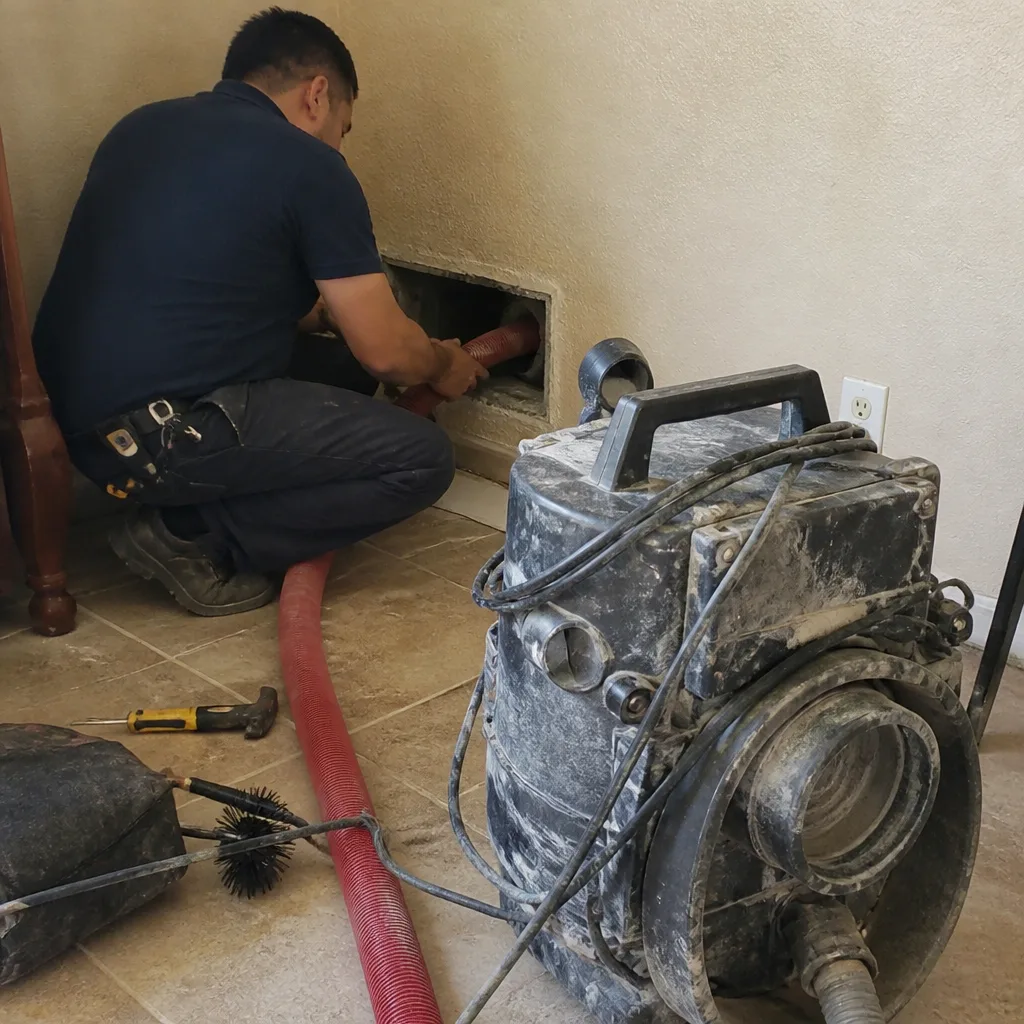 Before
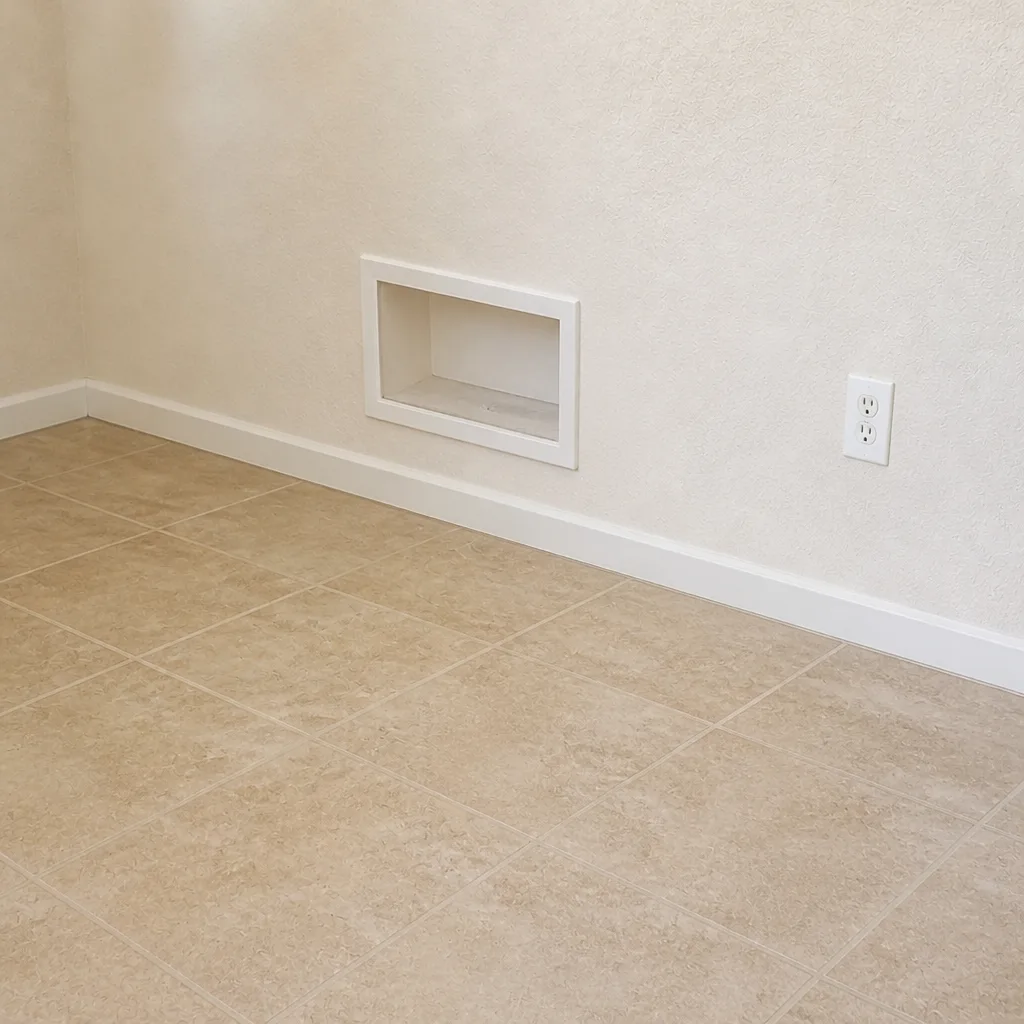 After
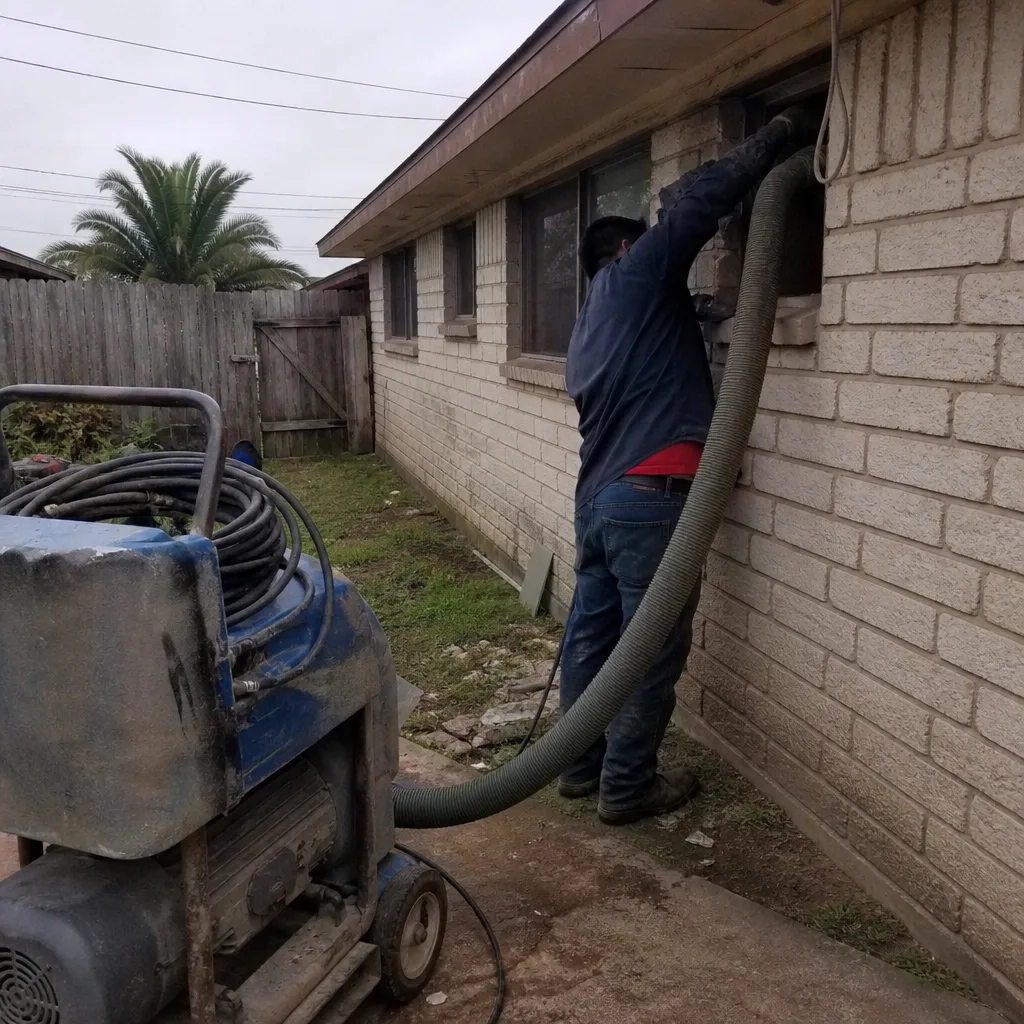 Before
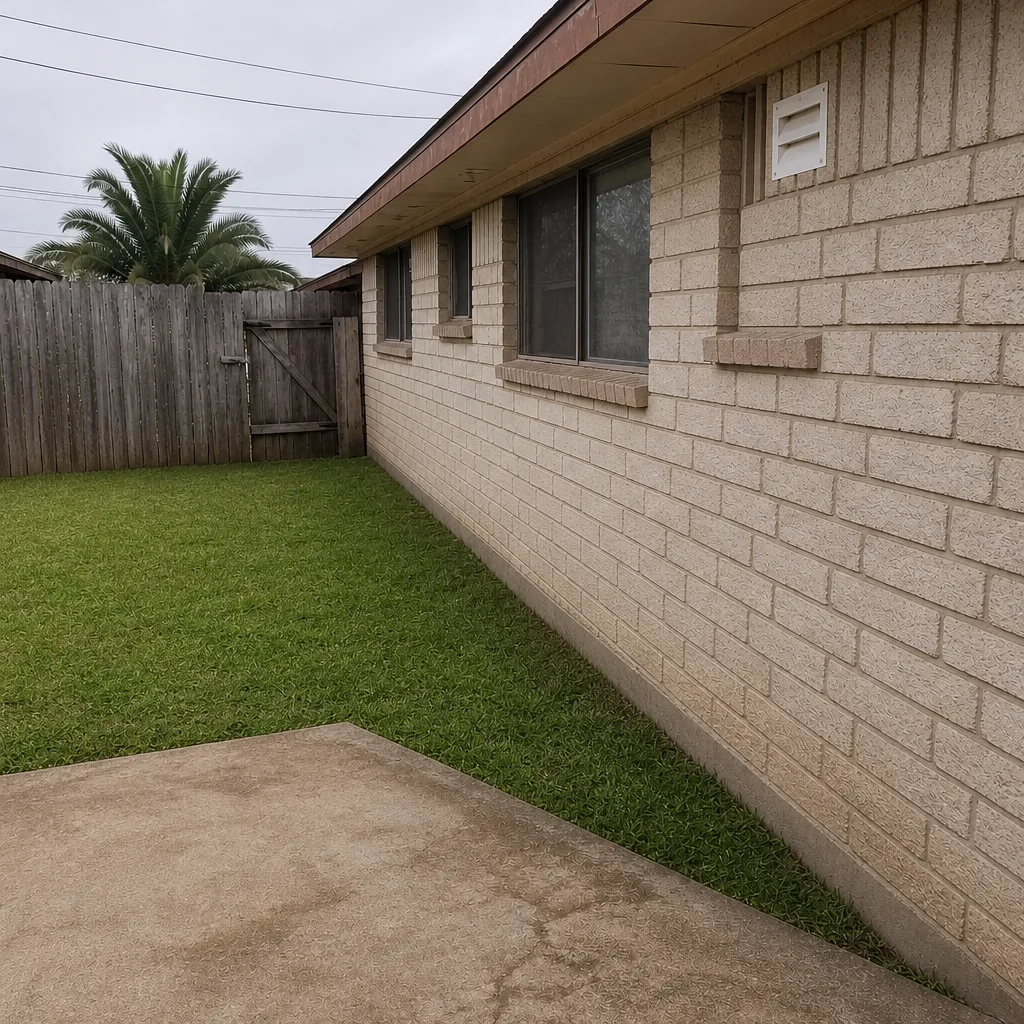 After
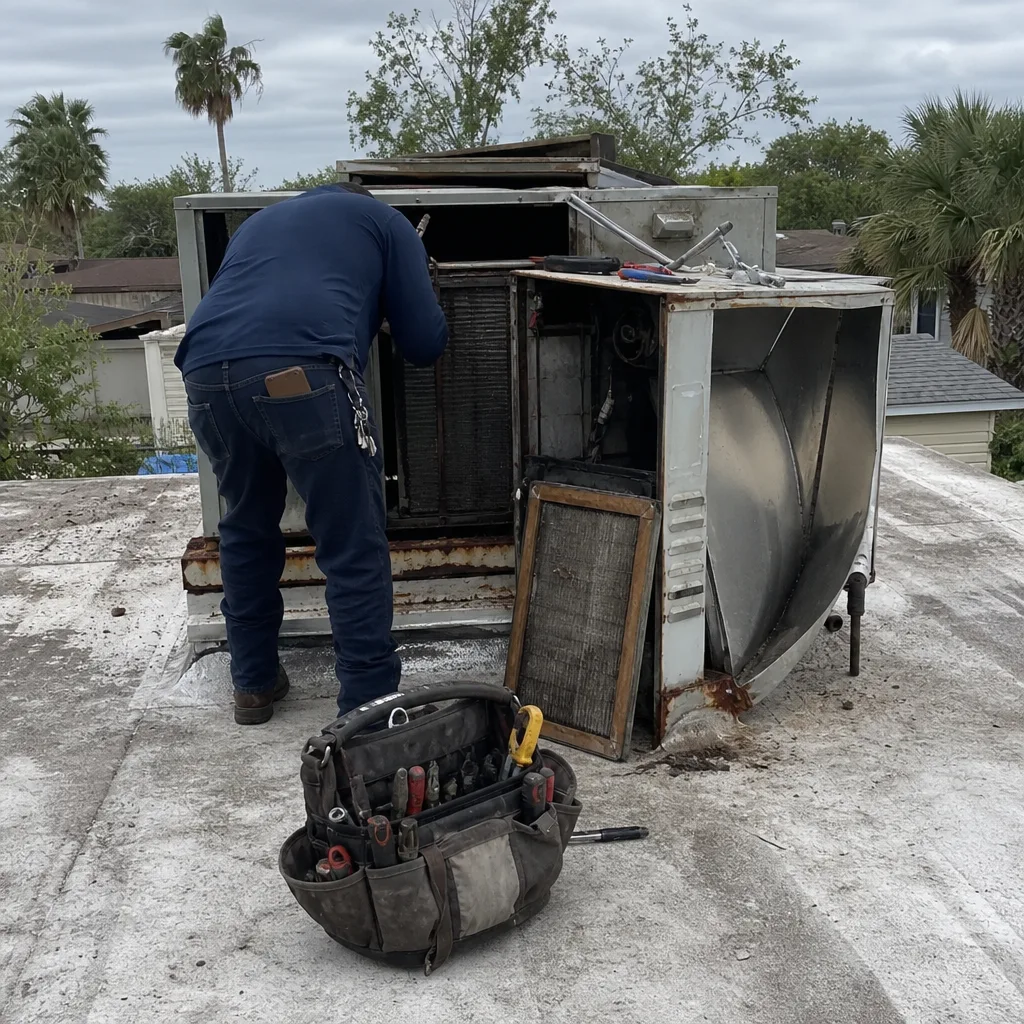 Before
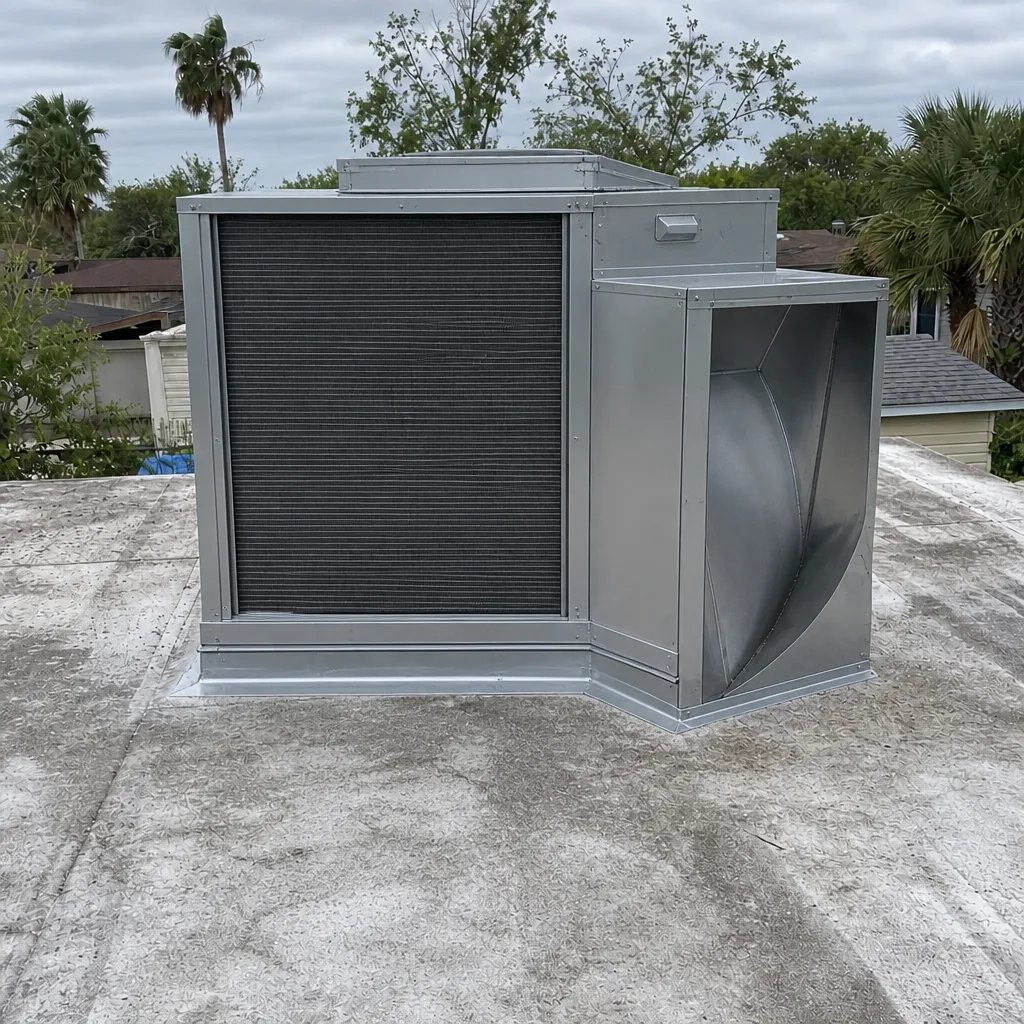 After
When to Call a Professional
Call a professional the moment you’ve confirmed a pattern rather than a hunch. If a tissue test shows weak flow at multiple vents and the return feels smothered, that’s a return path problem. If one vent is weak and the air at it is lukewarm, that’s a disconnected branch. If a musty smell doesn’t fade after the system runs, that’s a moisture problem and you want a real inspection. If the filter keeps collapsing, the return is undersized. If a flexible supply duct has visibly collapsed in the attic, don’t climb up there to fix it yourself, and don’t try; the attic heat and the risk of damaging adjacent ducts make that a professional job. Sycamore Air Duct Cleaning offers free estimates in Brownsville. Call (866) 986-5459. We answer 24/7. Fast dispatch from 7am to 7pm, Sunday through Friday.
Frequently Asked Questions
The actual problem is almost always a mechanical restriction, not debris. A crushed or kinked flex run, a disconnected boot at the register, a blocked return path, or a leaking trunk joint will all mimic dirty-duct symptoms perfectly and none of them are fixed by cleaning. An inspection with a camera and a pressure gauge tells you which one it is. Call (866) 986-5459 and we can walk your symptoms through the diagnosis – estimates are free.
A musty smell after cleaning usually means the underlying cause wasn’t dirt but moisture, and it was there before the cleaning. Mold or mildew growth on the evaporator coil, in the drain pan, or on duct surfaces fed by a water source won’t go away with a cleaning. The fix is to find the water source, address it, and remediate the affected surfaces with proper containment. Call (866) 986-5459 to schedule an inspection and we’ll tell you what we find – estimates are free.
Uneven room temperature in Brownsville is usually a duct leakage problem, not a debris problem. Joints in the attic that have aged out leak conditioned air into the attic, and the far end of the branch pays the price. It can also be an undersized return being pinched by closed doors, or a disconnected boot at the far register. Each one has a different fix. Call (866) 986-5459 and we’ll diagnose it before recommending anything – estimates are free.
A dry, dusty smell that fades once the system runs is the smell of settled dust being lifted and is addressed by cleaning. A damp, sour, musty smell that doesn’t fade is a moisture signature and needs a moisture fix, not a cleaning. The difference matters, because cleaning over active mold growth doesn’t solve the problem. Call (866) 986-5459 and we’ll help you tell the two apart – estimates are free.
Ask three things: what contact-cleaning equipment will be used, what vacuum will capture the debris, and what containment will keep dust out of your home. Rotobrush contact cleaning and Nikro HEPA vacuums are the industry-standard pair on the cleaning side, and Abatement Technologies negative-air units are the standard on the containment side. A shop vac and a hose is not a substitute. Call (866) 986-5459 to book a free estimate and we’ll walk you through the equipment that will be in your home.
You verify it three ways: compare register airflow before and after with a tissue test, spot check the interior behind a register with a flashlight, and ask for before-and-after photos of the duct interior. Photos are a standard part of professional work and are completely reasonable to request. If your technician can’t produce them, you have no way to verify. Call (866) 986-5459 for a free estimate with documented before-and-after photos.
The Bottom Line
Most of what gets called a “dirty duct” problem in a Brownsville home is actually one of three diagnosable failures: collapsed flex duct in the attic, a blocked or undersized return, or a disconnected boot or trunk joint. Cleaning fixes debris. Repair fixes the system. Knowing which you need is the whole job. If you’ve already had a cleaning that didn’t fix the symptom, the ductwork was right the first time; the diagnosis was incomplete. Test the airflow yourself, note the smell, and call someone who inspects before quoting. The right equipment matters too: Rotobrush, Nikro, and proper containment are the difference between removing dust and redistributing it. If you want a proper diagnosis and a free estimate, reach out to Sycamore Air Duct Cleaning and we’ll find out what’s actually going on. Learn more about Brownsville and the neighborhoods we serve, and start with a full-system indoor air quality specialist who inspects first.
Call (866) 986-5459 for a free estimate and a proper inspection. We answer 24/7. Fast dispatch from 7am to 7pm, Sunday through Friday, and we’re closed Saturday. A call outside dispatch hours is booked into the next opening, Sunday through Friday, 7am to 7pm.
Written by the team at Sycamore Air Duct Cleaning.