
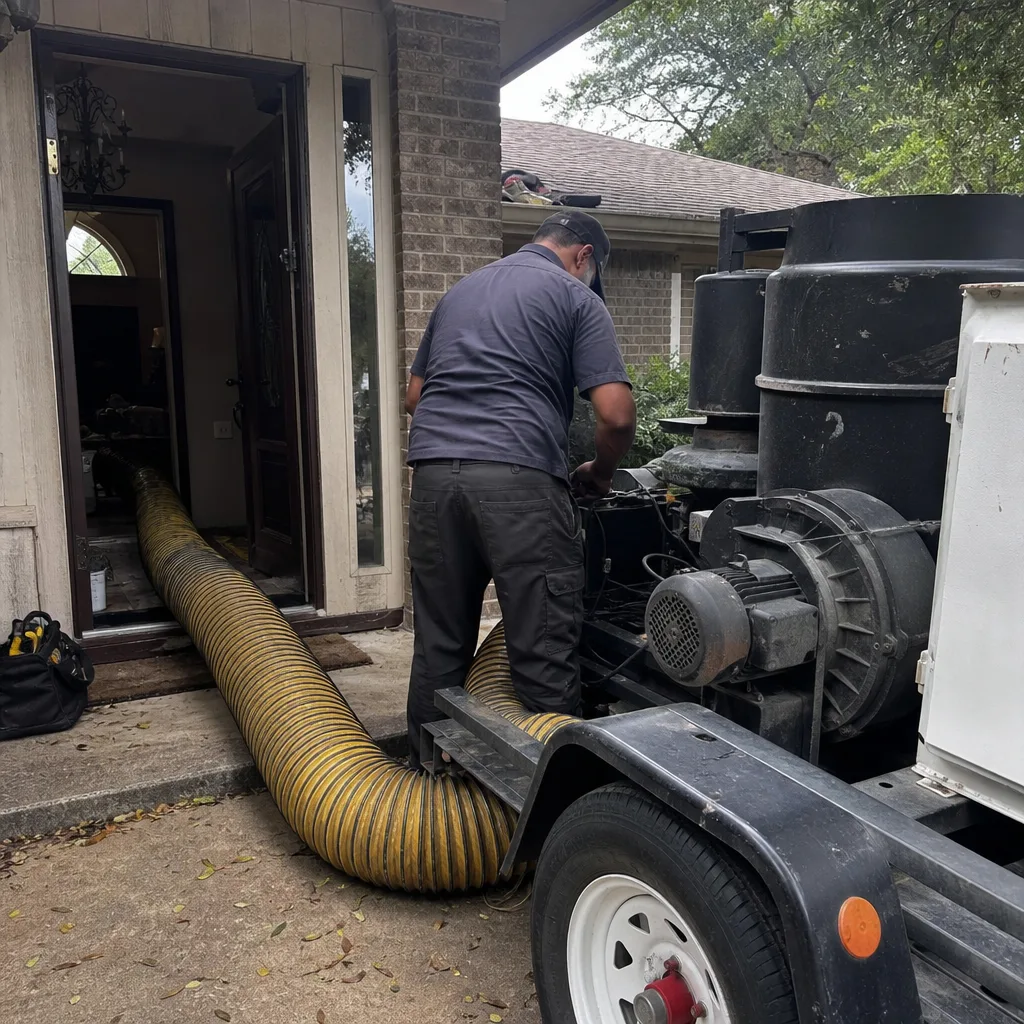
Last updated November 15, 2026
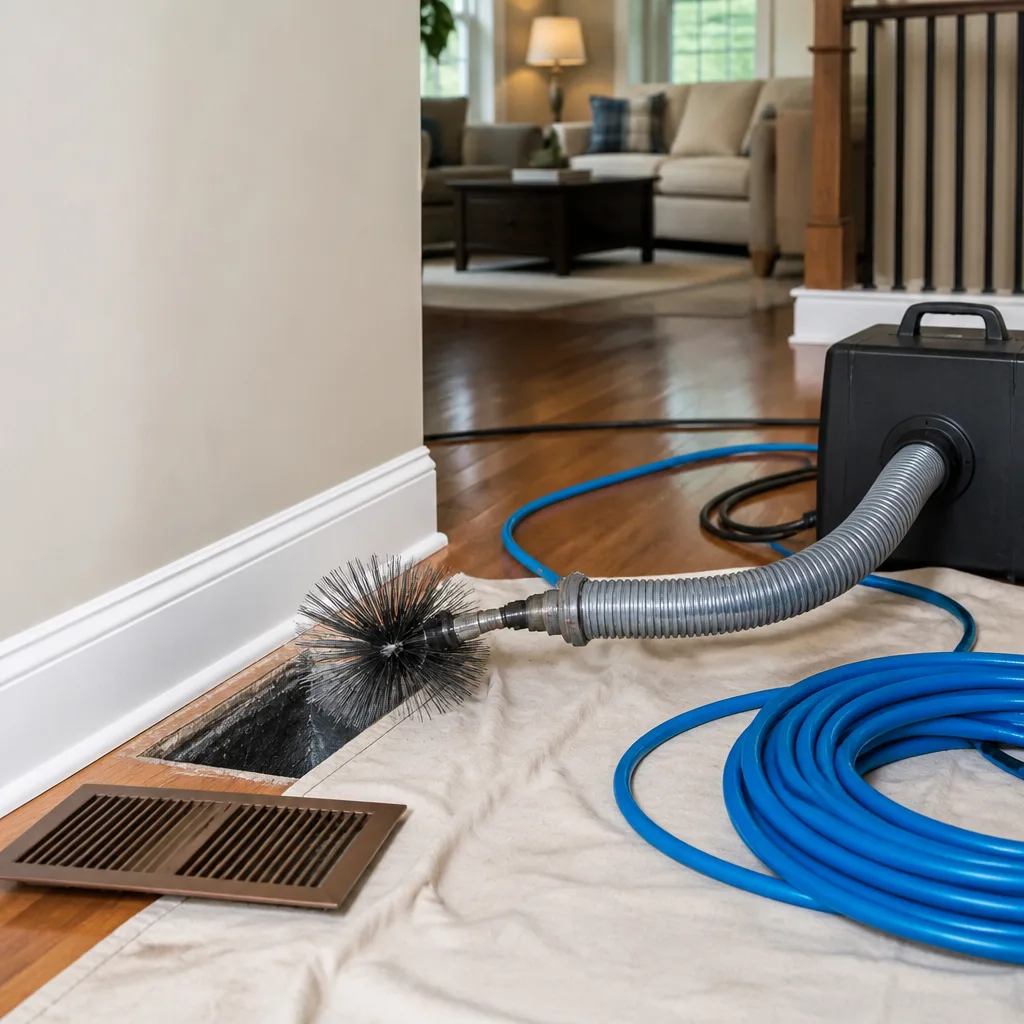 Whole-home duct cleaning
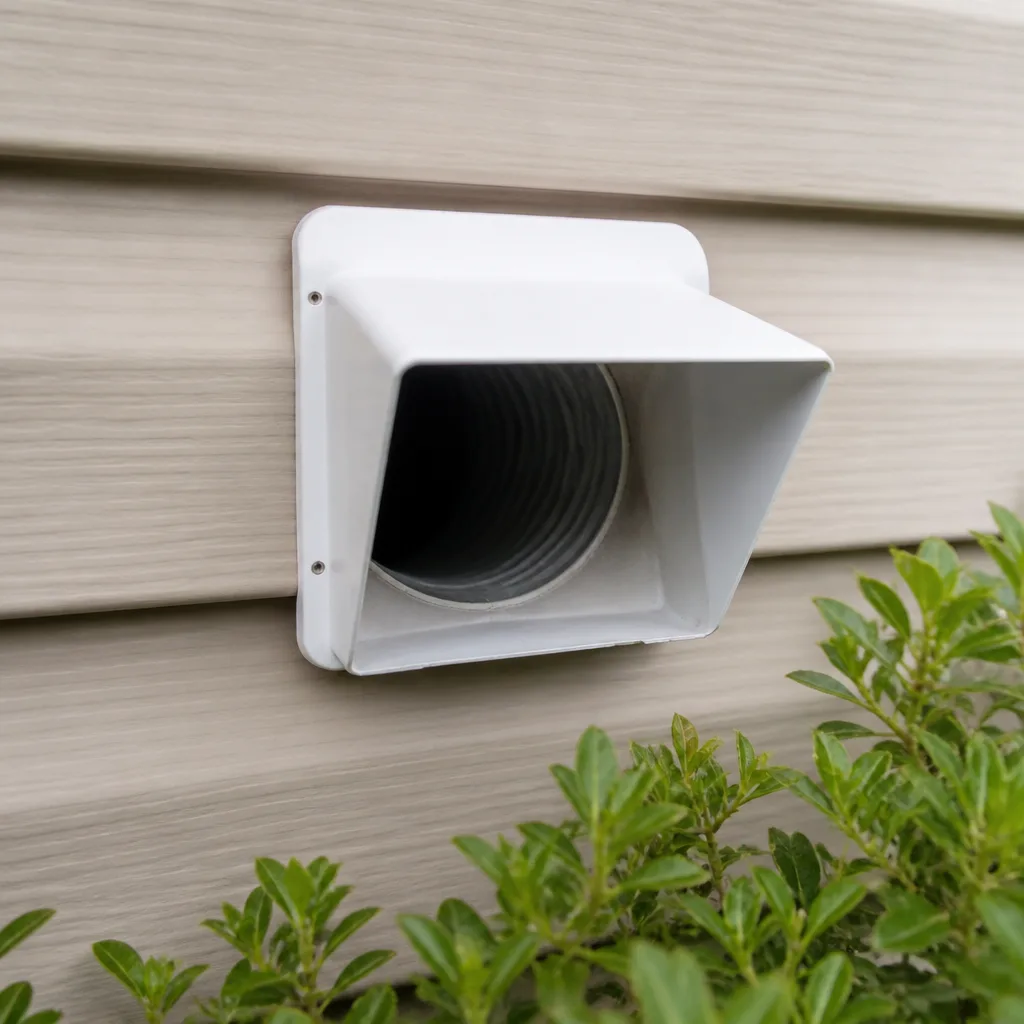 Dryer vent cleaning
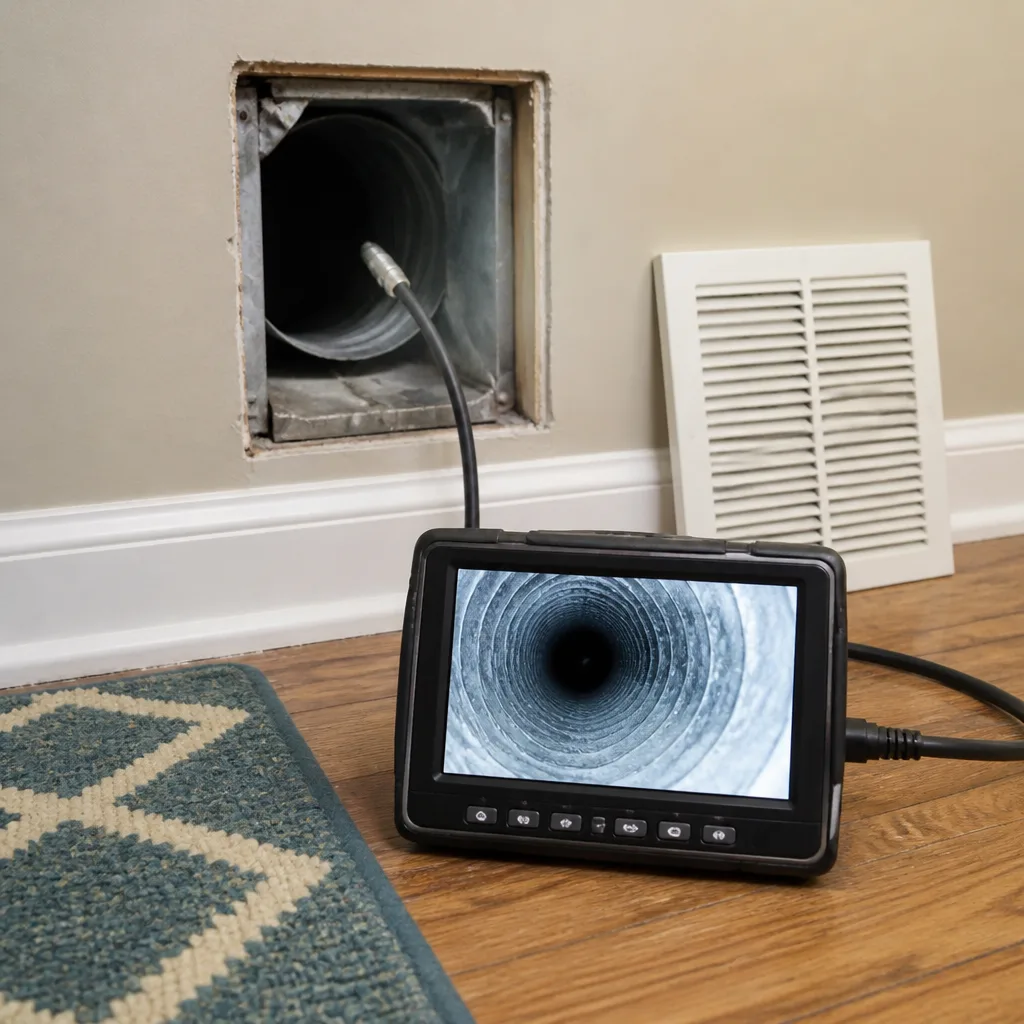 Camera inspection
 Sanitizing & deodorizing
Whole-system duct and dryer vent check with before-and-after photos - you see exactly what came out of your vents
That "$99 whole-house special" is a bait ad - the real number appears once they are in your hallway, or the "clean" is a shop-vac at the register. We photograph the inside of your ducts before and after instead.
Air Duct Cleaning Emergency Preparedness Guide for Brownsville Homes
Most Brownsville homeowners treat duct cleaning as spring maintenance, something to schedule between other chores. That’s the wrong frame for a region where a single storm can turn your ductwork into a contamination zone within days. The counterintuitive point is this: after a flooding or moisture event, the cleaning you schedule is not the same job as the cleaning you schedule in calmer weather, and the difference between a straightforward cleaning and a full remediation project often comes down to how quickly you act on the system itself. In this guide, we’ll walk through the emergency protocol hunters of mold in duct systems follow, how to assess whether Brownsville storm moisture has compromised your HVAC, when cleaning is appropriate versus when Texas-licensed remediation is required, and what you need documented for an insurance claim.
Quick Answer
If a storm or flooding event has introduced moisture into your home, shut down your HVAC system immediately and do not run it until the ductwork has been inspected. Mold can colonize wet duct liner within 24 to 72 hours, so the first three days matter more than any other window. A professional inspection determines whether you need post-storm cleaning or TDLR-regulated mold remediation, and that assessment should happen before you restart the system.
Styles & brands we work with
- Whole-home duct cleaning
- Dryer vent cleaning
- Camera inspection
- Sanitizing & deodorizing
Table of Contents
- Why Brownsville’s Storm Profile Changes Your Duct Risk
- The 72-Hour Rule: What to Do in the First Three Days
- How to Assess Whether Storm Moisture Compromised Your Ductwork
- Post-Storm Cleaning vs. Post-Storm Mold Remediation
- Documentation Requirements for Insurance Claims
- Pre-Storm Preparation for Duct System Integrity
- The Post-Storm Recovery Checklist
- Common Mistakes to Avoid
Why Brownsville’s Storm Profile Changes Your Duct Risk
Brownsville sits in a region where tropical systems and hurricane remnants aren’t hypothetical. The Rio Grande Valley’s wet season delivers heavy rainfall, and high-wind events can drive water through exterior building envelopes, around HVAC penetrations, and into attic spaces where return ductwork often runs unsealed. When that happens, the duct system becomes a moisture trap. It’s dark, it’s enclosed, and it circulates air throughout your home continuously when the system is running.
That combination is exactly what mold needs. Unlike a damp bathroom wall where you can see the problem, duct contamination happens out of sight. Homeowners in Brownsville neighborhoods like Southmost, La Paloma, and the areas near the resacas often discover compromised ductwork weeks after a storm, when a musty smell appears or allergy symptoms that had faded come back with force. By then, the scope of work has grown.
The real issue isn’t the storm itself. It’s what happens in the days after. A leaky supply register that took on water, an attic return line with a compromised vapor barrier, or flexible ductwork that soaked up humidity when the system pulled outside air through a failing seal – all of these become contamination sites. The contamination spreads every time the system runs, because airborne spores get distributed through the same ducts delivering conditioned air.
Brownsville’s housing stock adds another layer. Much of the city’s residential construction uses flexible duct runs in attics, and those flex ducts are particularly vulnerable to moisture intrusion when exterior seals fail. The material itself can absorb moisture, and once wet, it holds that moisture far longer than rigid metal ductwork would. That’s why we tell homeowners here to treat any storm that brings water into the attic or living space as a potential duct event until proven otherwise. We clean, repair, and protect, and the repair piece matters more in storm recovery than most people realize.
The 72-Hour Rule: What to Do in the First Three Days
The first three days after a storm that introduced moisture into your home are the window where you can still limit contamination. Mold colonization doesn’t wait, and it doesn’t require standing water. Relative humidity above roughly 60 percent sustained on a porous surface is enough for many common indoor molds to establish a foothold. Your duct liner, insulation, and any wetted flex duct material qualify as porous surfaces.
Here’s the protocol we recommend, in order:
- Shut the system off at the thermostat and at the breaker. This is the single most important step. Every minute a contaminated system runs, it distributes spores through your living space.
- Document what happened before you remove anything. Photograph the water line, wet areas, and any visible moisture in or around registers. We’ll cover documentation in more depth below.
- Remove standing water and run dehumidification. If you have a portable dehumidifier, run it in the affected rooms. Air movement with fans helps in dry rooms but can spread contamination if the duct system is already compromised, so keep fans off near affected registers.
- Do not attempt to dry out ductwork yourself. Duct interiors are not accessible for consumer drying equipment, and pushing air through wet ductwork with a shop vac or fan can aerosolize the very contaminants you’re trying to contain.
- Schedule an inspection within the 72-hour window. A professional assessment can distinguish between ductwork that got damp and ductwork that needs full remediation, and that distinction saves significant scope later.
If the storm was a near-miss and no water entered your home, you’re likely in maintenance territory rather than emergency territory. But if any part of your duct system got wet, treat the 72-hour window as real. In our experience with Brownsville humidity, the “it’ll dry out on its own” approach is the single most common reason a small duct issue becomes a large remediation project.
How to Assess Whether Storm Moisture Compromised Your Ductwork
The challenge with duct contamination is that it’s hidden. You can’t see inside your ductwork any more than you can see inside your walls. But there are warning signs that tell you the system needs a professional look, and running your HVAC to “test” whether it’s working is the wrong approach because it spreads the problem if one exists.
Watch for these indicators:
- Musty or earthy odor when the system first kicks on, even after the rooms themselves smell fine. This often points to growth in the air handler or supply trunks.
- Visible water staining around ceiling registers, on attic insulation near duct runs, or on the air handler cabinet.
- Uneven airflow where one side of the house gets weak supply and the other gets strong. Compromised flex duct can collapse or kink when wet.
- Allergy symptoms that returned or worsened after the storm, especially if they clear when you leave home and return when you come back.
- Visible mold on registers, grilles, or the air handler exterior. Any visible mold signals a professional assessment is necessary.
- Higher-than-usual humidity inside that dehumidification isn’t fixing, which can indicate the system is pulling in outside air through compromised seals.
What you shouldn’t do is run the system to see if the smell clears. That’s the move that converts a contained problem into a whole-home contamination event. In Brownsville, where the air handling equipment often sits in attic spaces that took on storm moisture, the air handler itself needs inspection even if the ducts look fine from outside.
An inspection with proper equipment – HEPA-level containment, negative-air protocol, and a look inside the system rather than just at the registers – tells you what you’re actually dealing with. That’s the difference between guessing and knowing. If you suspect storm moisture reached the system, the right call is to schedule a professional inspection before you restart it.
Post-Storm Cleaning vs. Post-Storm Mold Remediation
This is the distinction that matters most for Brownsville homeowners after a flooding event, and it’s the one most people don’t know exists. Post-storm duct cleaning and post-storm mold remediation are different services with different legal requirements in Texas. Cleaning removes accumulated debris, dust, and light contamination. Remediation addresses active mold growth, and in Texas it is regulated by the Texas Department of Licensing and Regulation (TDLR).
Under Texas rules, mold remediation work above a certain scope must be performed by a TDLR-licensed mold remediation contractor, and the project follows a documented protocol with containment, negative air, and post-remediation verification. Duct cleaning alone is not a substitute for remediation when the assessment finds active mold colonization inside the system.
Here’s how to think about which service applies:
- Cleaning is appropriate when the ductwork got damp but shows no active growth, when debris or sediment entered the system, or when the assessment finds contamination limited to normal buildup plus storm dust and debris.
- Remediation is required when the assessment finds active mold growth inside the duct system, when the contamination scope exceeds what routine cleaning can address, or when the duct liner material itself has become a growth substrate.
- Both may be needed when cleaning removes the source and remediation addresses what’s left, and the sequence should follow a documented protocol.
What we do at Sycamore is clean, repair, and protect, and we deploy Abatement Technologies negative-air and containment equipment – the same standard used in professional mold and contamination remediation projects – because post-storm work in a Brownsville home shouldn’t be done with improvised equipment. Where remediation licensing is required, that work needs to be handled by a licensed remediation contractor, and we’ll tell you that plainly rather than blur the line. Ask any contractor two questions: what equipment is coming into your home, and are they licensed for the scope this job requires.
Documentation Requirements for Insurance Claims
Texas homeowners insurance policies vary widely on how they cover duct and HVAC damage from storms. Some cover the water intrusion and resulting damage; some exclude certain causes; and nearly all require documentation that establishes the cause, the timing, and the scope. The documentation you gather in the first days after a storm has a direct bearing on how smoothly a claim proceeds.
Here’s what to collect and preserve:
- Date-stamped photographs of the water intrusion before any cleanup. Photograph the water line, wet materials, and the storm conditions if safe to do so.
- Photographs of the HVAC components – air handler, visible duct runs, and registers – showing any moisture, staining, or debris.
- Records of when the system was shut down and when the home was dehumidified. A simple written log with dates and times supports the timeline.
- Your contractor’s written assessment, including findings inside the duct system, photos of the interior, and the recommended scope of work with a clear statement about whether cleaning or remediation is appropriate.
- Before-and-after photos of the duct interior if cleaning is performed. This is standard practice for reputable contractors and invaluable for claim support.
- Receipts for any emergency measures – dehumidifier rental, temporary repairs – because many policies reimburse reasonable mitigation costs.
One thing homeowners often miss: the contractor’s documentation needs to be specific about what was found, not just what was done. “Cleaned ducts” is not a claim-supporting record. “Visual inspection found moisture staining in the supply trunk and debris accumulation in three runs; interior photos attached; cleaning performed with HEPA vacuum and contact cleaning” is. Ask for that level of detail, and keep the file with your policy documents. If you’re working through a claim and need an assessment documented for your insurer, call (866) 986-5459. We can work with your insurer on the documentation side.
Pre-Storm Preparation for Duct System Integrity
The best duct emergency protocol is the one you never have to use. When a tropical system is forecast for the Brownsville area, a few hours of preparation can mean the difference between a duct system that comes through intact and one that needs remediation after the storm passes.
Here’s the pre-storm sequence we recommend:
- Seal exterior register points and penetrations. Check where ductwork and refrigerant lines pass through exterior walls and the roof line. Caulk or seal any gaps, and use temporary weatherproofing tape on exterior vents that aren’t designed for wind-driven rain.
- Cover outdoor HVAC components. The condenser unit outside should be secured against wind-blown debris. Follow manufacturer guidance on covering the unit; strapping and debris removal matter more than wrapping it, since a covered running unit can overheat.
- Inspect attic duct runs before the storm. Look for disconnected flex duct, sagging runs, or damaged vapor barriers. A duct that’s already compromised will let in storm moisture far more readily than an intact one.
- Time the system shutdown. Shut the system off before the worst of the storm arrives, particularly if the forecast includes wind-driven rain or a loss of power is likely. Running the system during the storm can pull moist outside air into the home through any compromised seal.
- Keep the system off until you’ve assessed for water intrusion. After the storm passes, don’t restart the HVAC until you’ve confirmed there’s no water in the attic, around the air handler, or in the duct runs.
These steps don’t take long, and they don’t require special tools. What they do require is thinking about your duct system as part of your storm prep rather than just your HVAC condenser. In a Brownsville home, that shift in thinking is the whole game. Professional air duct cleaning after the storm is far more effective when the system hasn’t had a chance to pull moisture and debris through it for days.
The Post-Storm Recovery Checklist
Once the storm has passed and it’s safe to move around your home, the recovery checklist runs in a specific order. Getting the sequence wrong means doing work twice or, worse, spreading contamination you could have contained.
- Confirm no standing water in the attic or near HVAC equipment. If there is, address it before anything else.
- Inspect the air handler and visible duct runs for moisture. Look for staining, condensation, or wet insulation.
- Photograph everything before cleanup. This is your insurance documentation base.
- Keep the HVAC off until the system has been assessed.
- Run dehumidification in rooms that got wet and remove soaked porous materials per your remediation contractor’s guidance.
- Schedule a professional duct inspection within the 72-hour window if there was any moisture intrusion into the system.
- Get the assessment in writing with interior photos and a clear scope recommendation.
- If cleaning is recommended, verify the equipment. Ask whether the contractor uses purpose-built systems like Rotobrush or Nikro HEPA vacuums and whether containment and negative air are part of the process.
One item that deserves its own line on this checklist: if your dryer vent runs through an exterior wall or roof that took storm damage, check it too. The dryer vent cleaning side of storm recovery is often overlooked, and a vent that took on water or debris is a different kind of fire risk. We treat it as a dedicated service for exactly that reason. A dryer vent is a fire risk, not a maintenance footnote, and storm debris can compromise it.
Common Mistakes to Avoid
- Running the HVAC to “air it out.” This distributes contaminants through the whole home. If the system might be compromised, running it is the single most damaging mistake you can make.
- Waiting for a smell before acting. Mold can establish in the duct system well before a smell is noticeable. Brownsville’s humidity gives it a head start, so the timeline runs faster than most homeowners expect.
- Assuming duct cleaning covers mold remediation. In Texas, remediation above certain scope is TDLR-regulated work. A contractor who treats cleaning as equivalent to remediation is telling you something about how they operate.
- Skipping photos before cleanup. Texas insurers need documentation of what was wet and when. Cleanup without photographs weakens your claim before it’s filed.
- Hiring based on a coupon price. Post-storm jobs attract out-of-area crews with low advertised prices that expand once they’re on site. Ask what equipment is coming into your home and whether you’ll get before-and-after photos.
- Ignoring the attic. In Brownsville, the air handler and return ducts are often attic-mounted. If the attic got wet, the ducts need a look even if the living space looks fine.
- Forgetting the dryer vent. Storm debris and moisture compromise dryer vents too, and a clogged or damaged vent is a fire risk independent of the storm.
See the difference
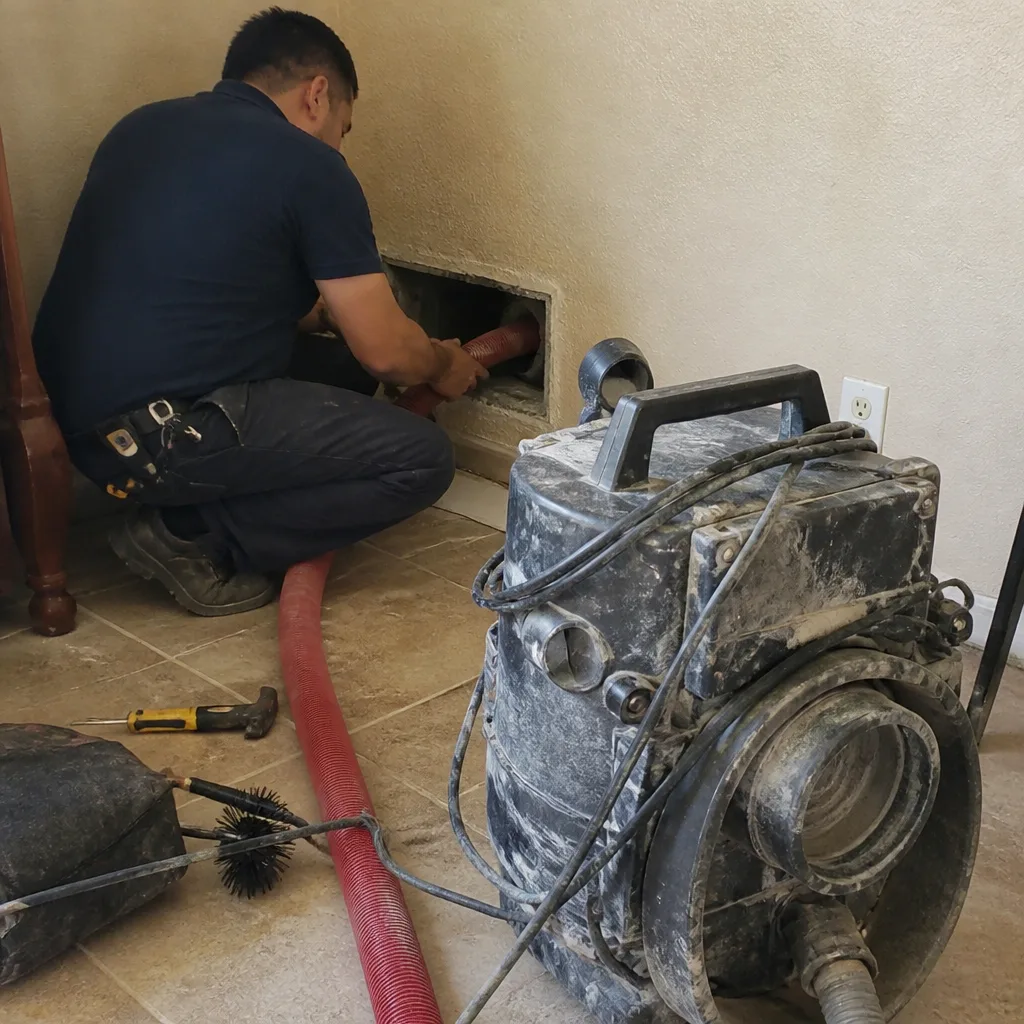 Before
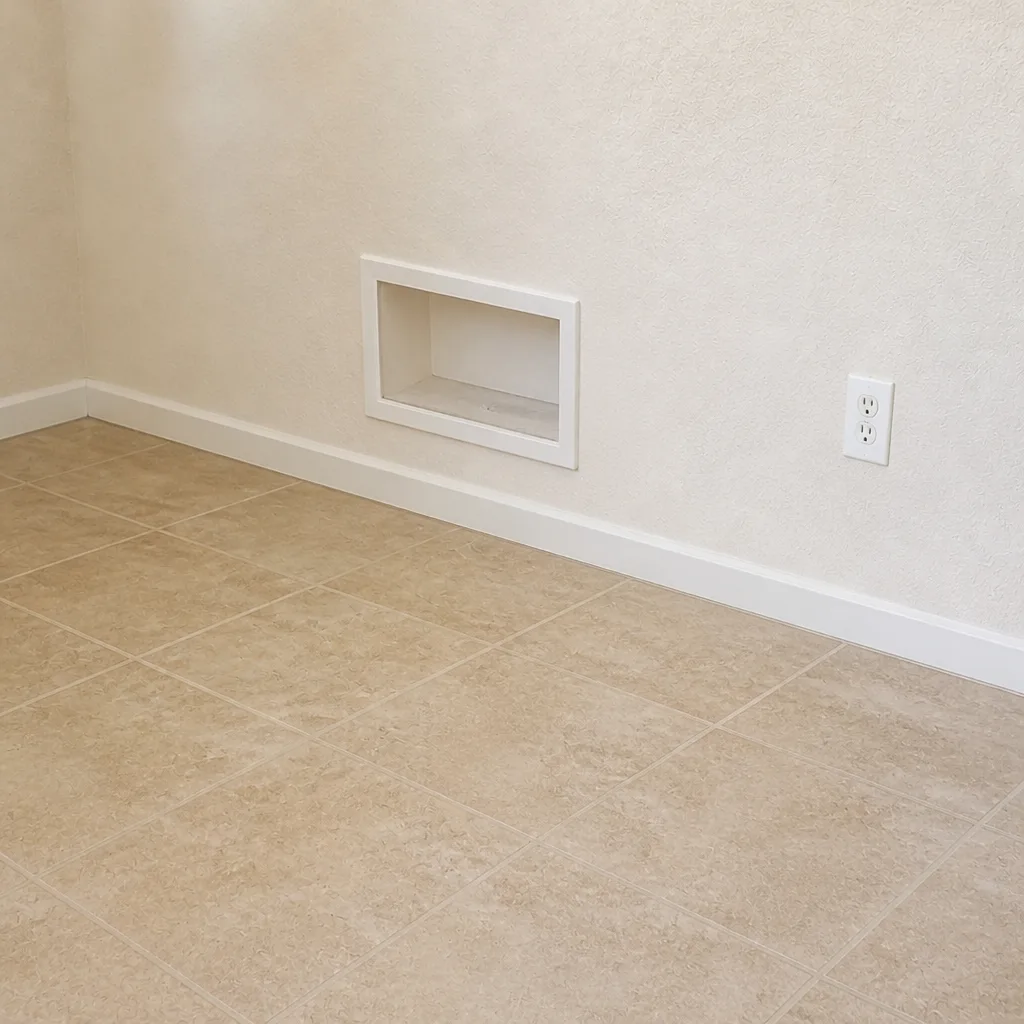 After
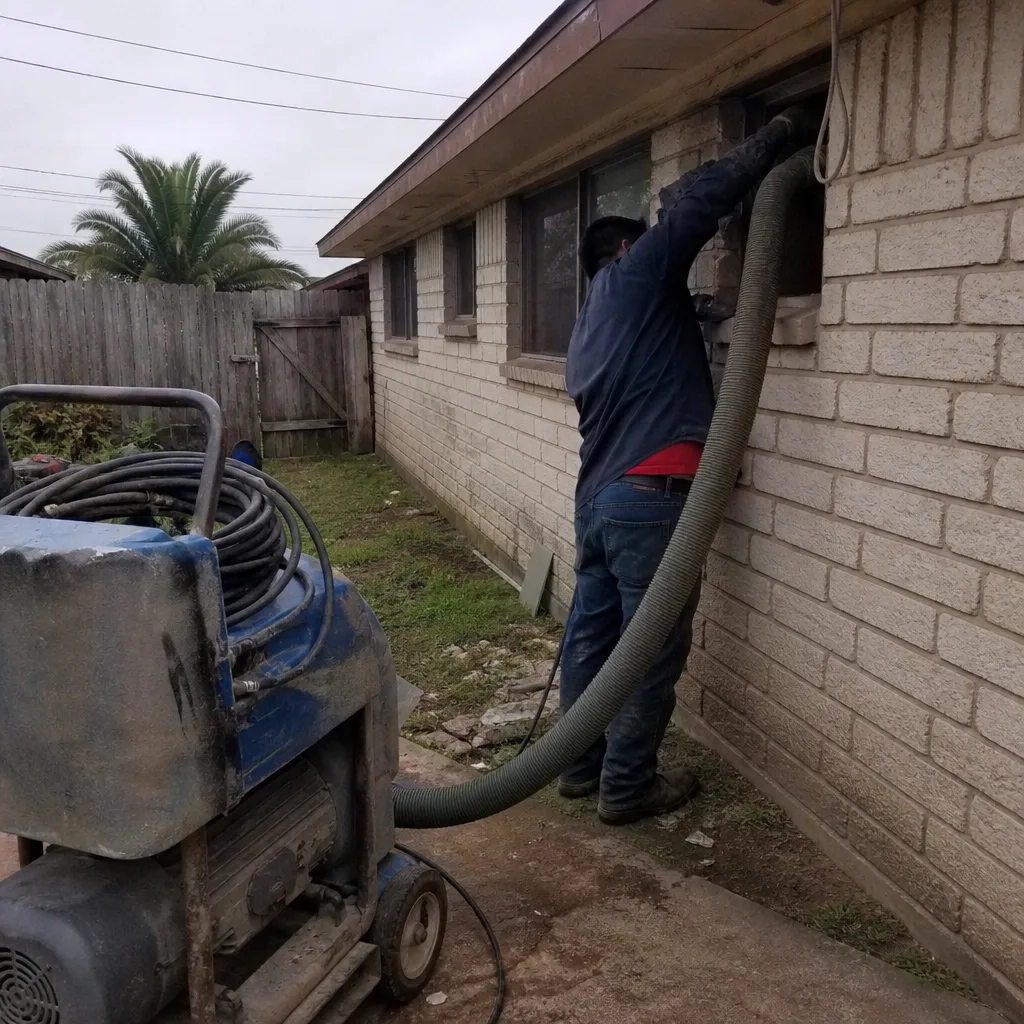 Before
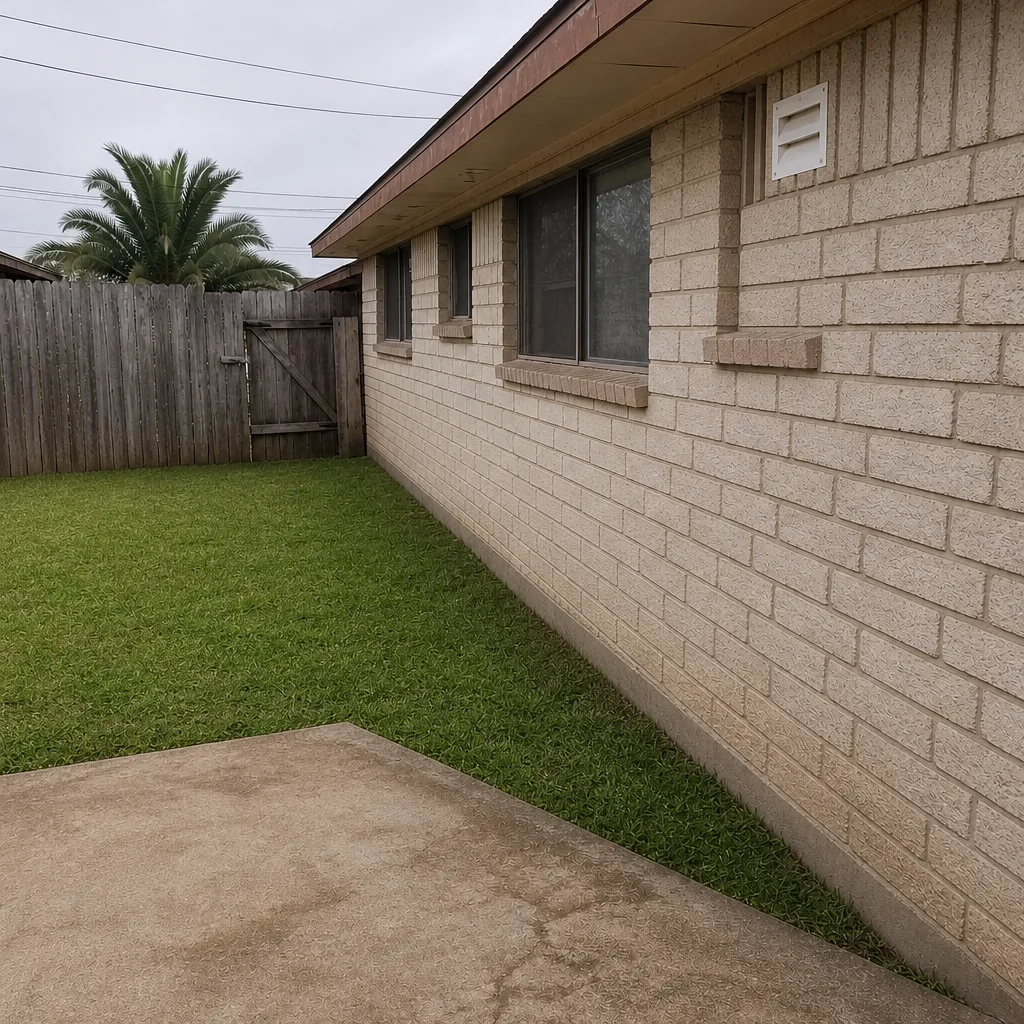 After
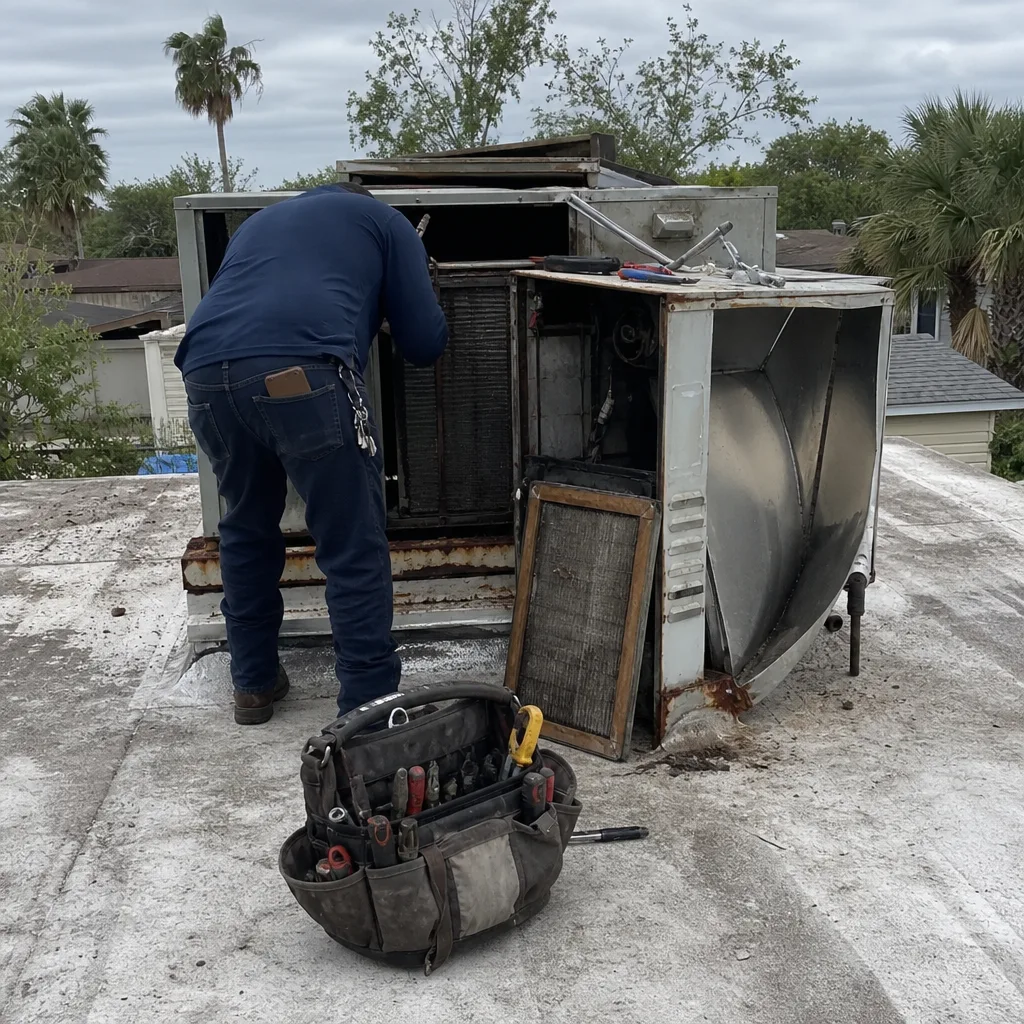 Before
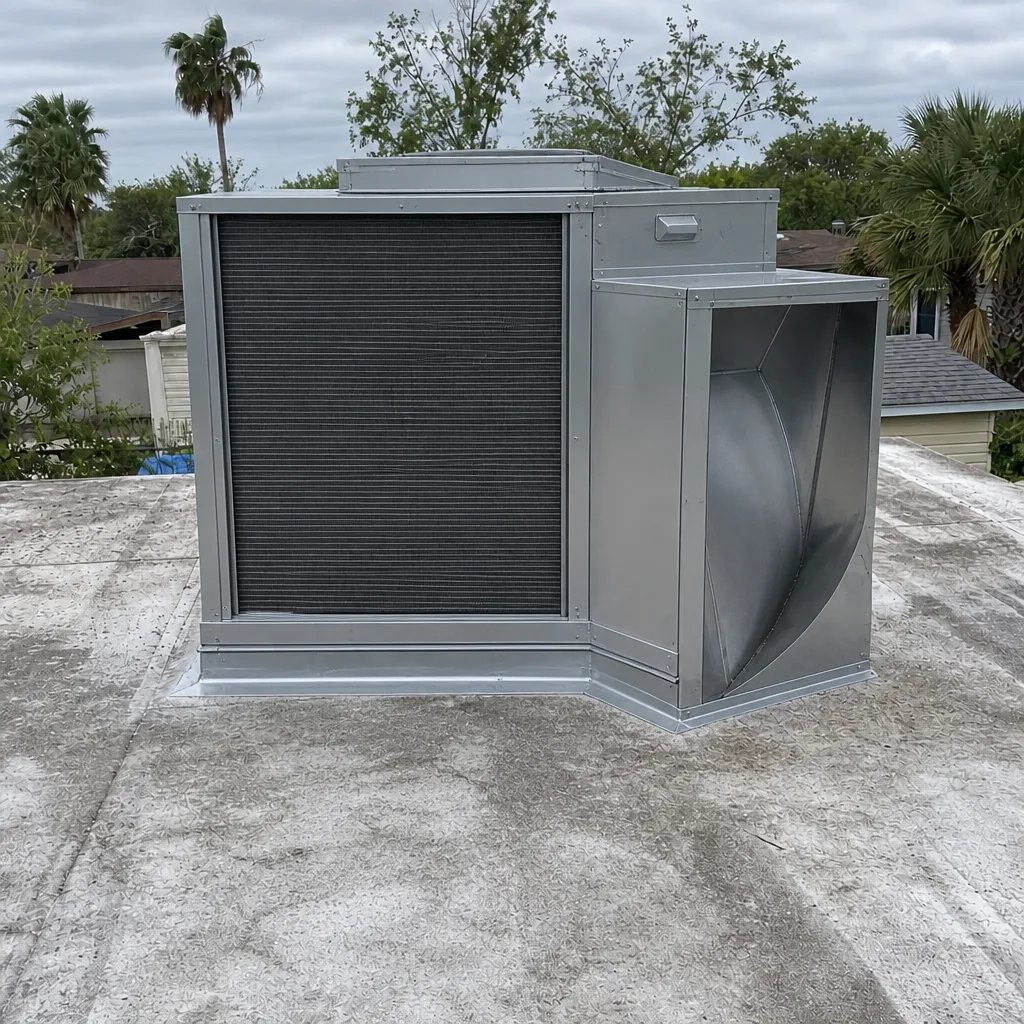 After
When to Call a Professional
Some situations call for a professional assessment without delay. If storm water entered your home at any level, if your attic took on moisture, if you smell mustiness when the system runs, or if anyone in the home has developed or worsened respiratory symptoms since the storm, call. If you’re not sure whether the system was compromised, that uncertainty is itself a reason to get an inspection – the assessment is the whole point of the 72-hour window. We work with professional-grade equipment including Abatement Technologies containment gear and Nikro HEPA vacuums, and we use Honeywell and Aprilaire products when a broader air quality conversation makes sense after the cleanup. Sycamore Air Duct Cleaning offers free estimates in Brownsville – call (866) 986-5459. We answer 24/7. Fast dispatch from 7am to 7pm, Sunday through Friday.
Frequently Asked Questions
You have roughly 24 to 72 hours to act before mold can establish in wet duct liner and porous duct materials. The window is shorter in Brownsville’s humidity than in drier climates, so treat the three-day mark as a real deadline rather than a rough guide. Call (866) 986-5459 for an assessment if you’re inside that window – the estimate is free.
No. Running a moisture-compromised system distributes spores and contaminants throughout your home and can turn a contained duct issue into a whole-home air quality problem. Keep the system off until a professional has inspected it and cleared it. Call (866) 986-5459 to schedule that inspection.
It may, but coverage depends on the cause of the damage and the terms of your specific policy, so review those terms or ask your adjuster directly. To support a claim, you need date-stamped photos of the water intrusion, contractor documentation of findings inside the duct system, and before-and-after photos of the work. Call (866) 986-5459 – we can work with your insurer on documentation.
When the assessment finds active mold colonization inside the duct system at a scope Texas rules require a TDLR-licensed mold remediation contractor to perform. Routine cleaning removes debris and light contamination; remediation addresses active growth with a documented protocol and post-remediation verification. Call (866) 986-5459 and we’ll tell you plainly which one your situation needs.
Ask whether the contractor uses purpose-built equipment like Rotobrush contact-cleaning systems and Nikro HEPA vacuums, and whether containment and negative air are part of the process. Abatement Technologies negative-air equipment is the standard used in professional remediation projects, and it’s the right question to separate prepared contractors from improvised ones. Call (866) 986-5459 to hear exactly what we’d bring into your home.
Seal exterior register points and penetrations, secure and clear debris from the outdoor condenser, inspect attic duct runs for disconnects or sagging, and shut the system off before wind-driven rain arrives. Keep it off until you’ve confirmed no water entered the attic or air handler. Call (866) 986-5459 if your pre-storm inspection finds anything that needs repair before the system runs again.
The Bottom Line
Storm readiness for a Brownsville home isn’t only about shutters and sandbags. Your duct system is the part of the house most vulnerable to post-storm contamination and the part hardest to inspect on your own. The takeaway from this guide: shut the system off the moment moisture enters the home, document everything before cleanup, treat the 72-hour window as real, and know whether your situation calls for cleaning or TDLR-regulated remediation before any contractor starts work. Prepare before the storm, act fast after it, and ask what equipment is coming into your home. That’s the whole protocol. For a free estimate and a straight answer about your duct system, we’re your local Sycamore Air Duct Cleaning team – call (866) 986-5459. We answer 24/7. Fast dispatch from 7am to 7pm, Sunday through Friday.
Written by the team at Sycamore Air Duct Cleaning.