
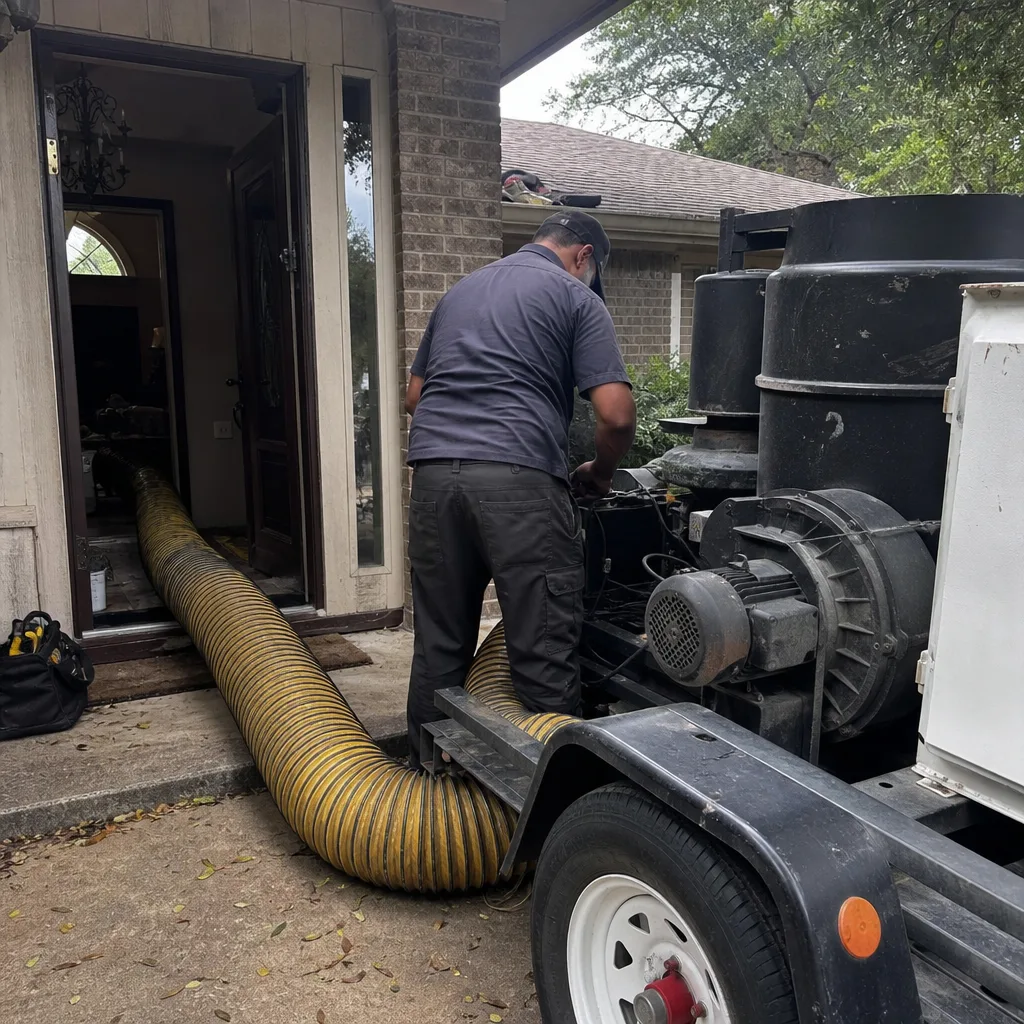
Last updated November 15, 2026
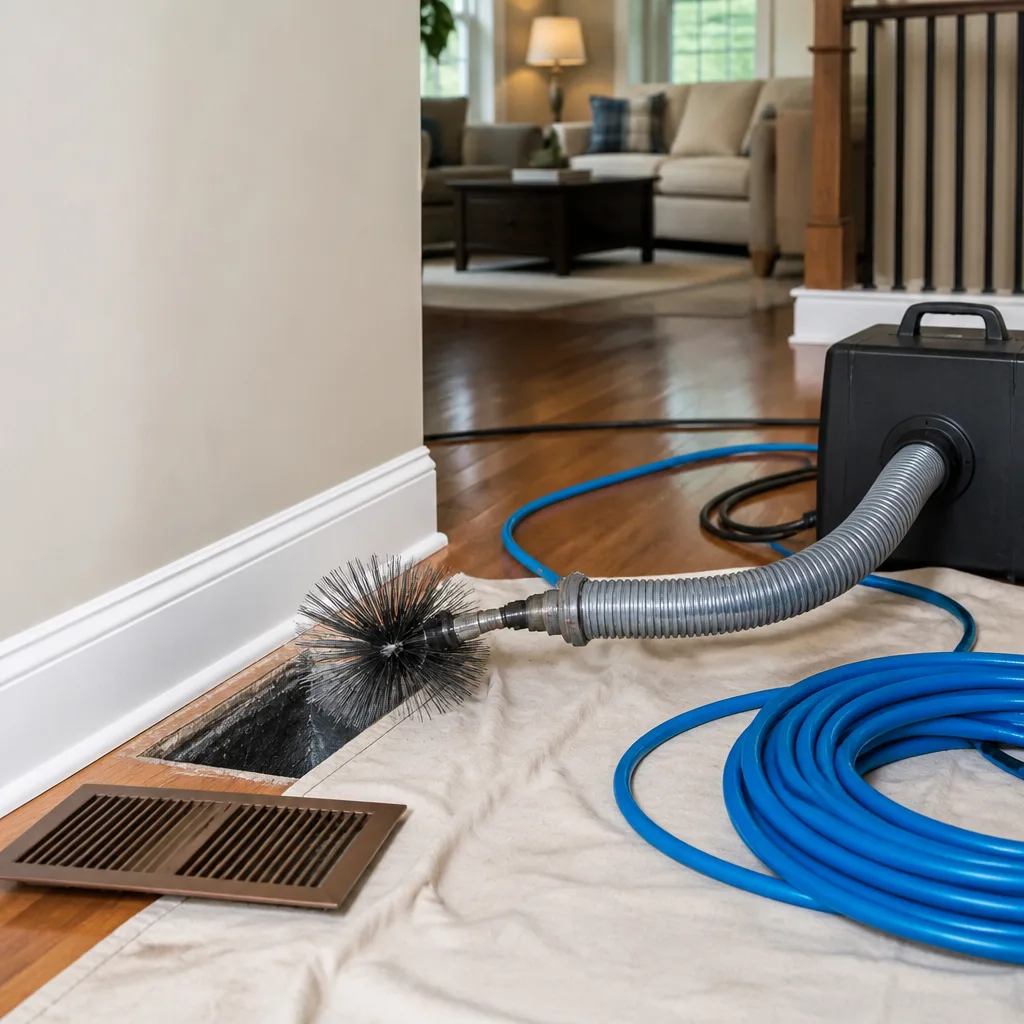 Whole-home duct cleaning
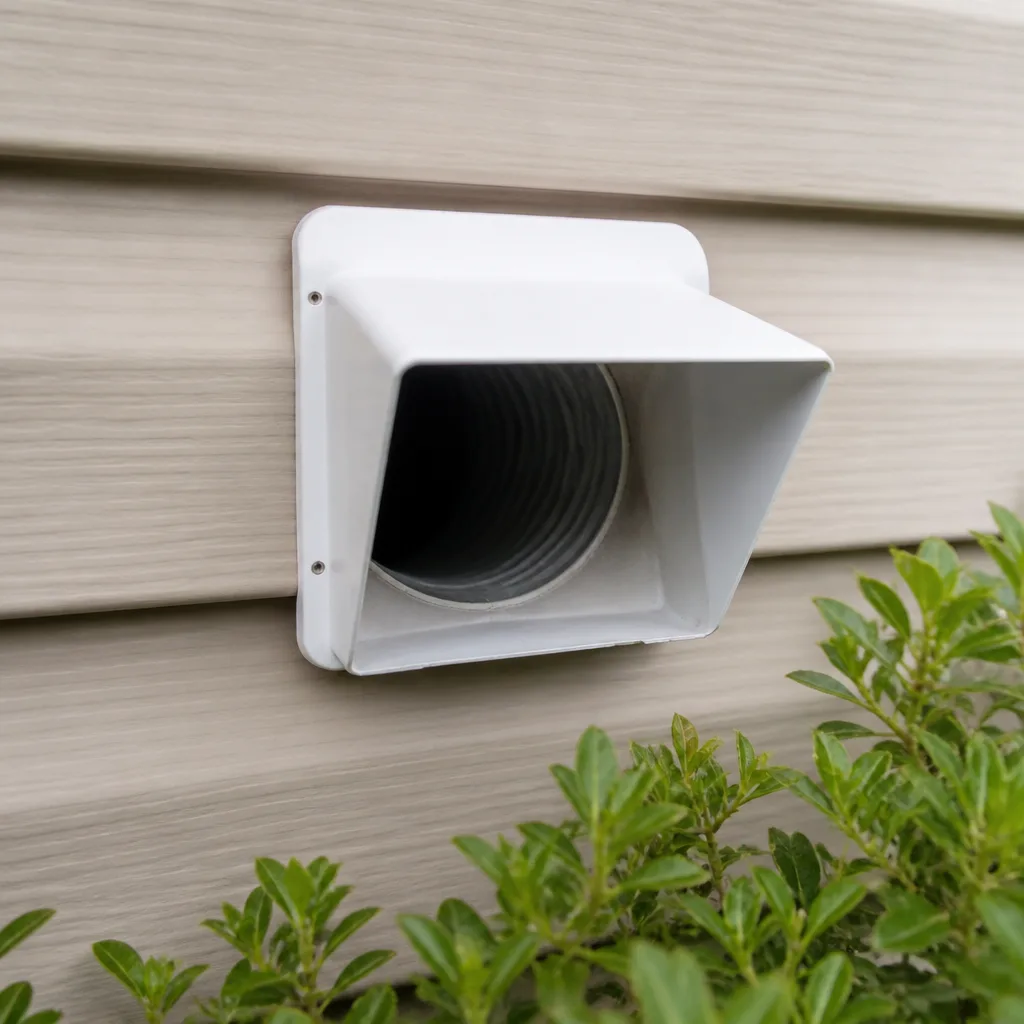 Dryer vent cleaning
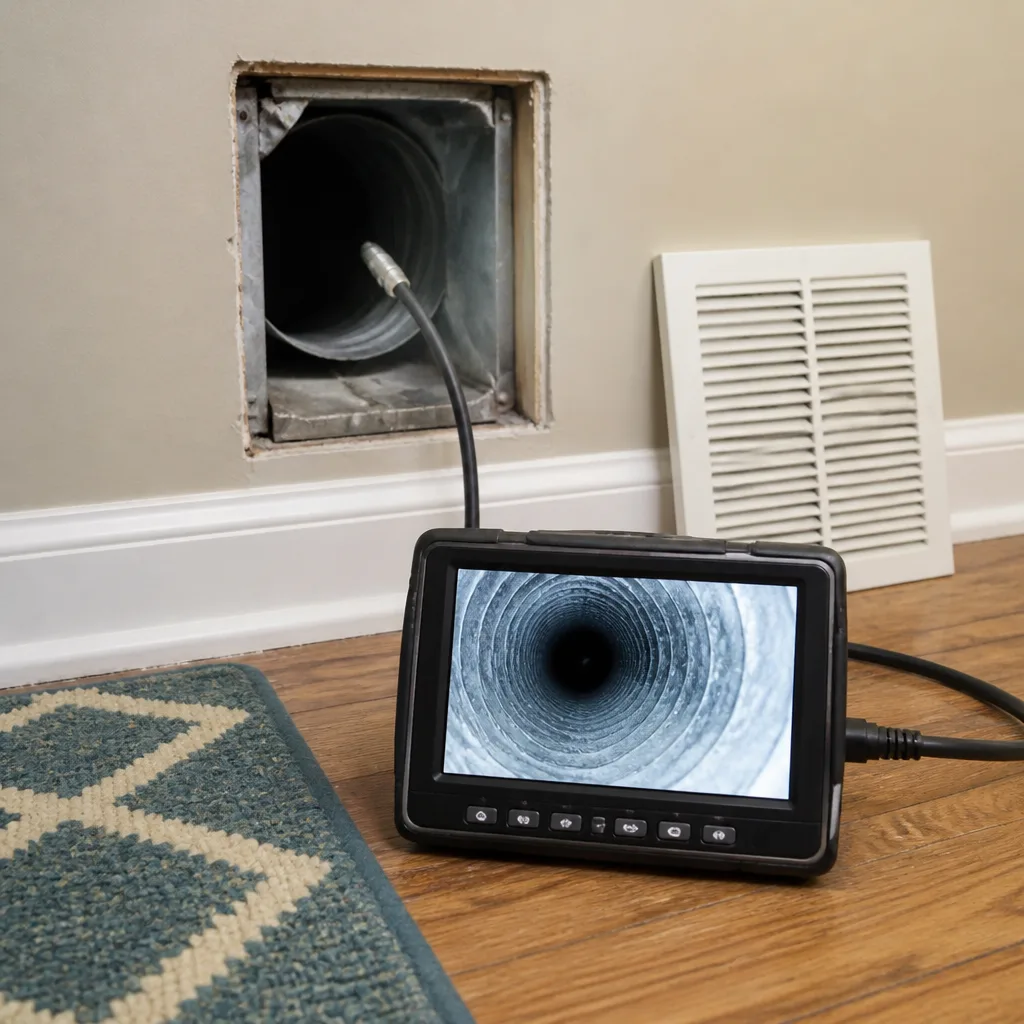 Camera inspection
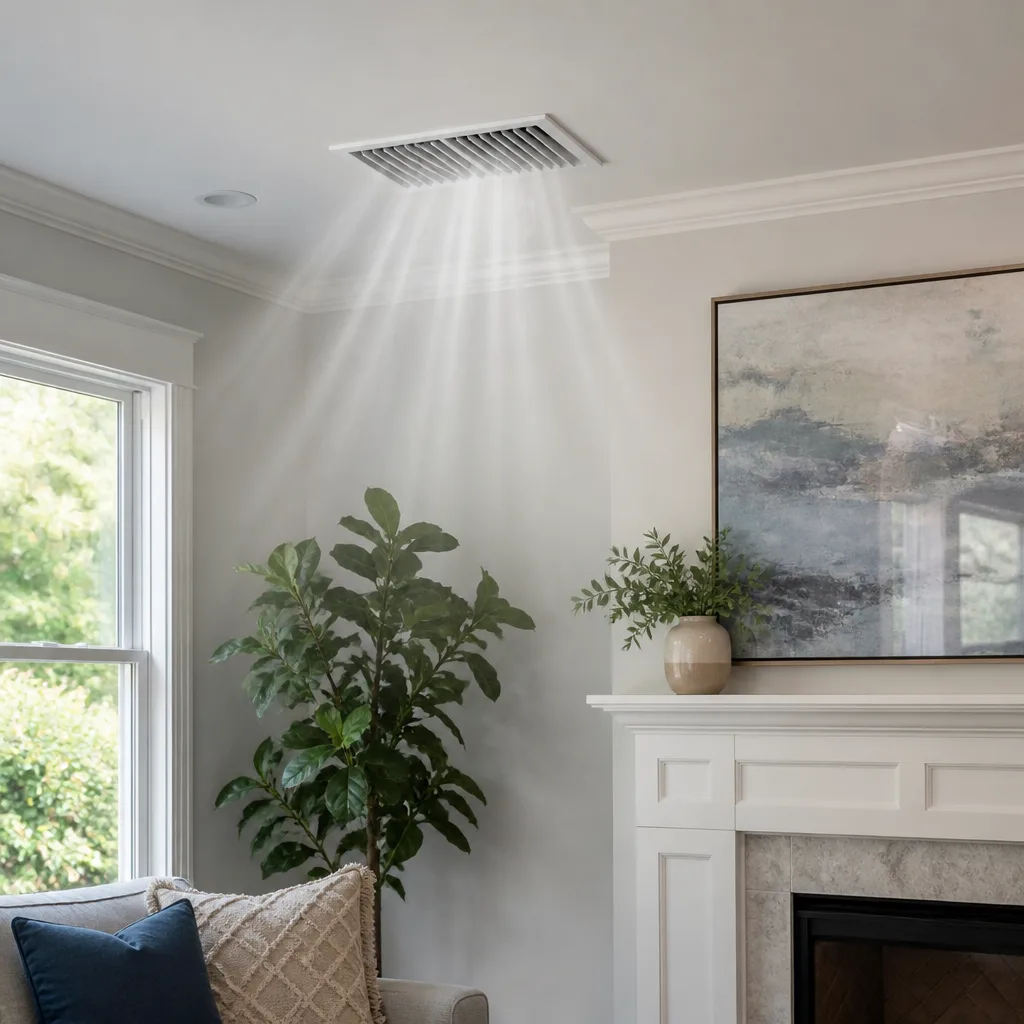 Sanitizing & deodorizing
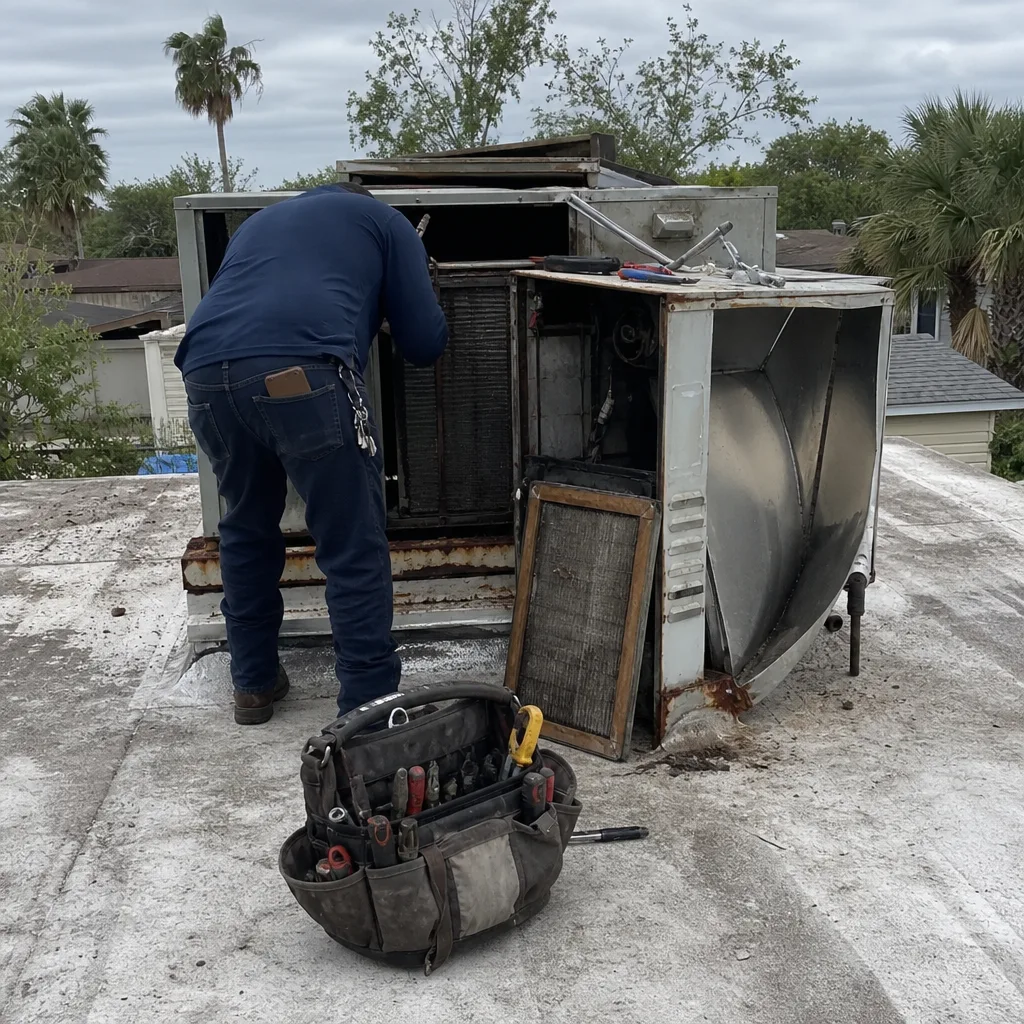
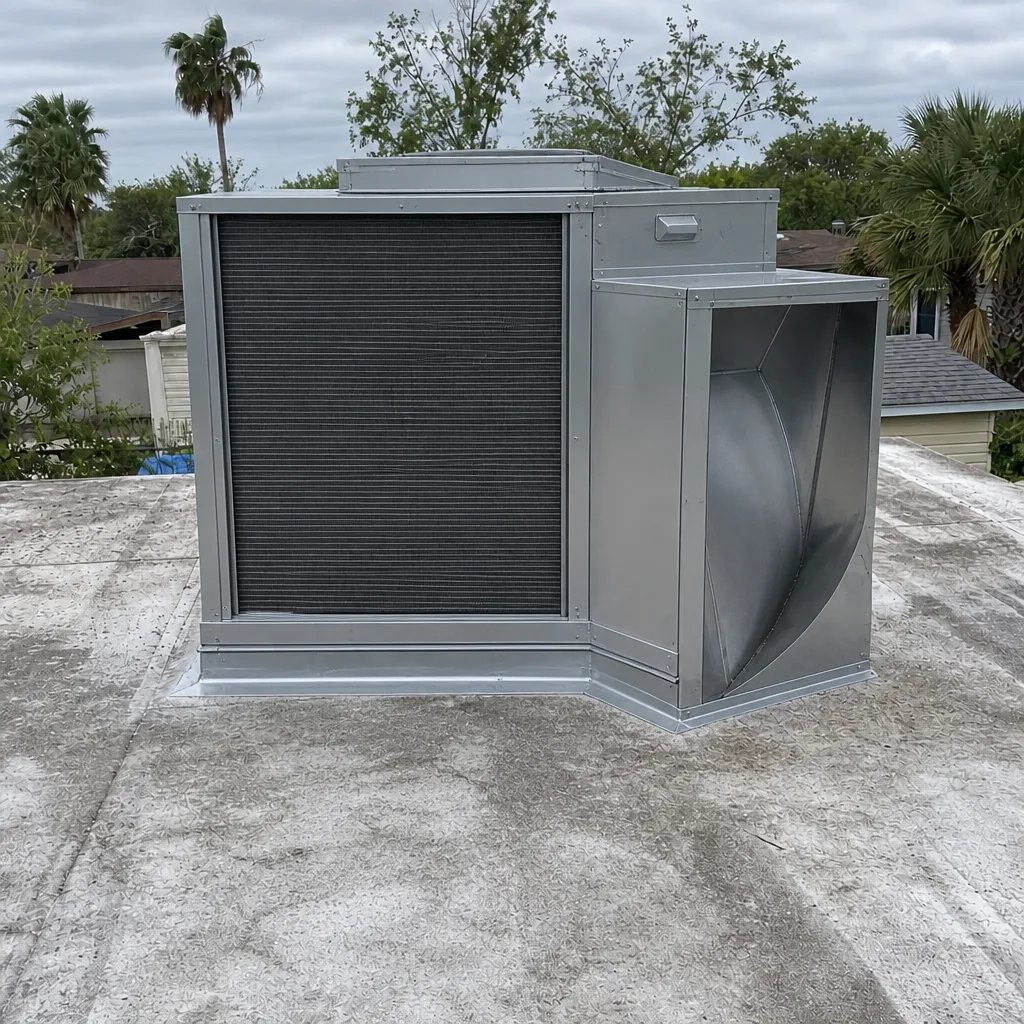
Whole-system duct and dryer vent check with before-and-after photos - you see exactly what came out of your vents
That "$99 whole-house special" is a bait ad - the real number appears once they are in your hallway, or the "clean" is a shop-vac at the register. We photograph the inside of your ducts before and after instead.
Choosing the Right Air Duct Cleaning Brand: A Buyer’s Guide for Brownsville
Star ratings don’t clean ducts. Neither does a wrapped van or a slick website. In Brownsville, where air duct cleaning is largely unregulated at the state level and where discount operators flood the market with coupon pricing, the only credential that matters is one most homeowners never ask about: what equipment is actually coming into the house, and can the person on the phone explain how it works? That’s the entire buying decision, and most people skip it because they don’t know what to ask. If you want the best air duct cleaning company in Brownsville TX, you have to learn to evaluate equipment and methodology, not branding or price. This guide gives you the framework, the exact questions to ask, and the red flags that reliably predict a substandard job.
Quick Answer
To choose the right air duct cleaning brand in Brownsville, evaluate three things before you book: the negative-pressure vacuum the company brings (not a portable blower), whether that vacuum uses HEPA filtration, and how the crew accesses and cleans the main trunk line. Verify NADCA membership independently rather than trusting a logo, and read reviews for specific language that indicates a full-system clean. Price, star ratings, and marketing polish tell you almost nothing.
Table of Contents
- Why equipment decides the job in Brownsville
- The three equipment questions to ask every company
- Why NADCA and the ACR Standard matter in an unregulated market
- How to read reviews for signs of a real full-system clean
- What local reputation means in a market like Brownsville
- Red flags in proposals and marketing
- How to verify a company before you book
- Common mistakes to avoid
- When to call a professional
- Frequently asked questions
Why Equipment Decides the Job in Brownsville
Air duct cleaning removes accumulated dust, debris, and other material from the inside of a duct system. The work is mechanical: you agitate the material loose with a rotating brush or contact tool, then you pull it out with a vacuum strong enough and sealed tightly enough to keep it from simply blowing back into the rooms. Without the second half of that equation, the first half is worse than useless. Agitating debris without adequate negative pressure just redistributes it through living spaces.
This is why brand comparison is a distraction. There is no state licensing requirement for duct cleaning in Texas, so the name on the van tells you nothing about what’s inside it. Two companies can both claim to clean ducts while one brings a truck-mounted or portable vacuum with real static pressure and the other arrives with a shop-vac and a drill brush. Homeowners in Brownsville, like everywhere else, tend to assume the equipment is roughly equivalent across providers. It isn’t. The gap between a professional negative-air setup and a budget blower is the difference between a clean system and an expensive dust storm.
In our view, the right question is to reframe the whole shopping process. You’re not comparing brands. You’re comparing equipment and methodology. When a Brownsville homeowner asks us about air duct cleaning, they usually want to know price and availability. Those are the last two things that should come up. First, find out what’s going into your home.
Professional-grade systems like the Rotobrush contact-cleaning family and Nikro HEPA vacuums exist specifically for this work. They’re not repurposed shop equipment. That distinction matters more in a market like Brownsville than any logo or review count, and it’s the fastest way to separate serious providers from the rest of the field.
The Three Equipment Questions to Ask Every Company
You can screen any duct cleaning company in a five-minute phone call with three questions. A knowledgeable provider will answer clearly and without hesitation. A discount operator will deflect, change the subject to price, or promise to “assess on site.”
- What vacuum unit do you bring, and what’s its static pressure or airflow rating? You need enough pull to capture debris from a full residential system, not just the register nearest the hose. A real provider names the equipment type and can describe airflow capacity in general terms. A vague “powerful vacuum” answer is a pass.
- Does the vacuum use HEPA filtration? HEPA filtration catches fine particulate that would otherwise pass through a standard filter and back into the air. Companies using true HEPA equipment will tell you so without prompting. Ask how the exhaust is captured and whether negative pressure is maintained during the whole job.
- How do you access and clean the main trunk line? The trunk runs the length of the system and is where most debris collects. Many budget crews clean only the branch runs and visible registers because the trunk is harder to reach. Ask about access points, sealing during cleaning, and how the trunk is brushed or air-whipped before extraction.
When we clean a residential system, we use Rotobrush contact-cleaning tools and Nikro HEPA vacuum equipment, and we set up Abatement Technologies containment and negative-air protocol before work begins. That last part is what remediation contractors use to prevent contamination during a project. Homeowners can ask any company whether they deploy negative-air containment, and the honest answers are instructive.
One more thing worth knowing: dust in ductwork isn’t the only concern. If there’s visible mold growth, rodent activity, or a pest infestation, that’s a different category of problem and warrants a contaminant-specific assessment. A quality provider will say so rather than upsell a standard clean. If you’re wondering whether your ducts are actually dirty or whether your issue is the Sycamore Air Duct Cleaning perspective on whole-house air quality, ask for a walkthrough.
Why NADCA and the ACR Standard Matter in an Unregulated Market
Texas does not license air duct cleaning. That means anyone with a vacuum and a business card can hang out a shingle and market to Brownsville homeowners. In that environment, voluntary industry standards do real work. The National Air Duct Cleaners Association (NADCA) publishes the ACR Standard, the recognized best-practice guideline for assessment, cleaning, and restoration of HVAC duct systems, along with a Source Removal Standard for duct cleaning. A company that follows the ACR Standard cleans to a documented process rather than a coupon-driven routine.
NADCA membership is meaningful because it’s voluntary and verifiable. But don’t take a website badge at face value. Logos are easy to copy. Here’s how to confirm:
- Ask the company directly for their NADCA member number and status.
- Look up the company by name on NADCA’s member directory (not a link from the company’s own site) and confirm the listing is current.
- Ask whether the crew follows the ACR Standard on every job, and ask for a plain-English description of what that involves.
- Be skeptical of “NADCA-certified technician” claims unless the company can point to the specific certification.
Following the ACR Standard means, at a minimum, a documented assessment before cleaning, source removal rather than fogging, containment to protect the home, and a post-clean verification. None of this is legally required in Brownsville. That’s exactly why it tells you something about a company’s seriousness. A provider that voluntarily adheres to a standard in an unregulated market is signaling a level of process discipline you can actually evaluate. A provider that markets on price alone has no standard to hide behind.
This is where an equipment story and a standards story come together. The best operators combine professional equipment with a documented method, and their proposal usually explains both. If a contractor can’t articulate their process in plain English, that’s your answer.
How to Read Reviews for Signs of a Real Full-System Clean
Online reviews for duct cleaning are noisy and easy to game. A five-star rating from someone who saw a tidy technician and a clean-looking register might not indicate a real full-system clean at all. You need to read past the stars and look for specific language. What did the reviewer actually see done? What did the company explain? What surprised them?
Here’s the language pattern that tends to indicate a genuine full-system job:
- Mentions of specific equipment or process: “showed me the brush,” “set up a big vacuum,” “taped off the registers.”
- Detail about the trunk line or main system, not just registers.
- Descriptions of before-and-after conditions, photos, or a walkthrough of what came out.
- Comments on the crew explaining the work, not just doing it quietly.
- Recurring themes about airflow improvement and dust reduction, stated in concrete terms.
Reviews reflecting superficial service often share a different shape. They praise speed and price and tidiness, but never mention anything about the inside of the system. A one-hour job on a full house isn’t a red flag on its own, but it usually isn’t a full-system clean either. If 90% of a company’s reviews read like “quick, affordable, friendly,” with no mention of equipment, process, or outcomes, the reviews are telling you the service was transactional. That’s fine for a small job. It doesn’t tell you the company cleans to a standard.
Read the low-star reviews too, and see how the company replies. A company that answers criticism with specifics and an offer to return and correct the issue is signaling something. A company that argues or deletes is signaling something else. For a Brownsville homeowner on a fixed budget, this triangulation is more reliable than the star average.
What Local Reputation Means in a Market Like Brownsville
Brownsville is a mid-size market with a small roster of providers, which changes the accountability math. In a big city, a fly-by-night operator can burn a few hundred homeowners and move on. In Brownsville, a company that markets only to individual homeowners and has no recurring or professional relationships can do the same, because the next customer hasn’t heard about the last one yet. Local reputation is unevenly enforced.
That’s why professional-account relationships matter as a signal. Companies that work regularly with property managers, real estate agents, and restoration contractors are subject to a different standard. Property managers need documentation, photos, and consistent results across multiple units. Real estate agents need a job done on a closing timeline and can’t afford callbacks. Restoration contractors need containment and negative-air discipline because they’re often working alongside mold and water damage remediation. A company that services those clients has to be able to defend the work repeatedly, not just once.
None of that is a formal credential you can look up. But you can ask. When you call a Brownsville duct cleaning company, ask whether they regularly serve property managers, real estate professionals, or restoration contractors. Ask what documentation they provide. Ask if they’ll share a sample report. The way a company answers those questions tells you whether their reputation is anchored to professional relationships or to coupon traffic.
There’s a related point about local context. Brownsville’s mild climate means duct systems here aren’t battered by the temperature swings that drive condensation and debris movement in colder parts of the country. That’s good news for your system’s lifespan. It also means the primary cause of dirty ducts in a Brownsville home is usually airborne dust, pet hair, pollen, and construction or renovation debris rather than seasonal condensation. A local provider should be able to talk about that distinction, because it affects how they approach the clean.
Red Flags in Proposals and Marketing
Most bad duct cleaning experiences follow a small number of scripts. Learn the scripts and you can spot them in a marketing post or proposal in under a minute. These are the reliable predictors of a substandard service:
- Price-per-vent pricing under $8. Real whole-system cleaning requires a vacuum, agitation equipment, containment, and labor. A per-vent price that low doesn’t cover those costs. In practice, these offers rely on upsells once the technician is inside, or on a superficial pass with a small blower.
- Same-day availability with no site assessment. Duct systems vary enormously in size, layout, and condition. A provider that will commit to a price over the phone without seeing the system and asking questions is either guessing or planning to adjust upward on site.
- Sanitizer upsells presented before the cleaning quote. Sanitizers and foggers don’t replace source removal. If a company pitches sanitizing before the actual cleaning is discussed, they’re selling an add-on, not a clean. A professional provider will note that sanitizers are optional and secondary to proper cleaning, and will advise caution for anyone with chemical sensitivities.
- No mention of equipment or process. If the proposal only mentions price and time, the company isn’t selling process. Beware of anything relying on improvised shop-vac equipment.
- Pressure to decide on the call. A contractor with real demand and real capacity doesn’t need to close you in the next five minutes.
- No documentation or before-and-after evidence. A professional clean can be documented. If the company can’t describe what they’ll show you afterward, they don’t have much to show.
There’s also a subtler red flag worth naming: any provider whose marketing leans heavily on the word “affordable” without any discussion of method. Price-first marketing is common and sometimes honest, but when it’s the only thing a company says about itself, it usually means there’s no equipment story underneath. The right response to a discount coupon isn’t always “avoid,” but it’s always “ask what’s actually included.”
A separate scenario worth flagging: dryer vents. A dryer vent isn’t an upsell. It’s a fire safety system. A company that markets dryer vent cleaning as an optional tack-on after duct cleaning misses the point. Quality providers treat dryer vent cleaning as a dedicated service with the same equipment discipline as full duct systems.
How to Verify a Company Before You Book
Here’s a short pre-booking checklist you can run through in fifteen minutes. It works for any duct cleaning company in Brownsville, and it will filter the field fast.
- Check for a working phone number and a real address. A phone number someone answers and a physical location you can look up are baseline. If those aren’t visible, stop.
- Ask about equipment on the phone. Use the three questions in the earlier section. Listen for names of professional systems, HEPA filtration, and negative pressure. If the answer is vague, that’s your answer.
- Confirm NADCA membership independently. Ask for a member number and verify it on NADCA’s directory. A current listing and a real process story beats a logo on a website.
- Ask about documentation. What do you get after the clean? A written report? Photos? Before-and-after evidence? A professional company has a consistent answer to this question.
- Ask about scope of services. Duct cleaning and dryer vent cleaning are separate jobs. Duct repair is a third. If a company offers all three, ask how they handle a system that turns out to have damaged or disconnected ductwork. A provider that can only clean will hand you off to someone else; a provider that handles repair as well keeps the responsibility in one place.
- Read three or four of their reviews for language, not stars. Look for equipment and process mentions. That’s your best signal that the company isn’t just running a marketing operation.
One last verification step: ask any provider what they’ll do if the ducts contain mold, rodent droppings, or pest debris. That’s a legitimate complication, not a routine clean, and it requires a different approach. Quality providers treat it as a separate assessment and describe a containment protocol. A provider who says “we’ll just sanitize it” is either guessing or planning to sell you something you don’t need.
We work with professional-grade equipment because it’s what a real clean requires. Rotobrush contact-cleaning tools and Nikro HEPA vacuums pull material out rather than moving it around. Abatement Technologies containment and negative-air equipment keep the work area protected while we’re in the system. Honeywell and Aprilaire product familiarity helps when a homeowner’s actual concern is whole-home air quality and not just the ducts. Guardsman-brand surface protection reflects the discipline of treating the home like it matters. You can ask any Brownsville provider to name their equipment, and the ones who can will stand out.
Common Mistakes to Avoid
- Booking on price alone. A cheap price is a starting point for a conversation, not a final answer. Always ask what the price includes and what equipment is coming into the home before you commit.
- Accepting a phone quote without a site assessment. Duct systems vary widely in Brownsville. A provider who will commit to a price without seeing the system is either guessing or planning an upsell.
- Skipping the trunk-line question. Most debris collects in the main trunk, not the branches. If a company only cleans registers and branch runs, you’re paying for a partial job.
- Confusing a logo with a membership. Any company can display a NADCA badge. Verify the membership on NADCA’s directory, not on the company’s own site.
- Ignoring dryer vents until they become a problem. Dryer vent cleaning is a life-safety service, not a maintenance footnote. If you’re booking a duct cleaning, ask separately about the dryer vent, especially on older machines and longer vent runs.
- Reading reviews only for stars. A five-star rating means a customer felt good about the visit. Look for language about process, equipment, and before-and-after results to tell whether the clean was actually thorough.
- Hiring for a cleaning when you need a repair. Loose, disconnected, crushed, or poorly routed ductwork will keep leaking even after a clean. If you’ve noticed uneven airflow or rooms that never get comfortable, ask about Brownsville duct repair as part of the assessment.
When to Call a Professional
Not every dusty house needs a duct cleaning. But several scenarios do call for a professional assessment. You should call if you’re seeing visible dust plumes at the registers when the system turns on, if family members have allergy or asthma symptoms that get worse indoors, if you notice a musty or stale smell coming from the vents, if you’ve just finished a renovation or drywall project, if there’s been water damage near the HVAC equipment, or if you’ve never had the ducts cleaned in a home you’ve recently purchased. Any of those is a reasonable trigger to have a company out for an evaluation. Airflow that feels uneven from room to room is another signal, because weak flow in some rooms often points to leaks or disconnected joints rather than dirt.
Sycamore Air Duct Cleaning offers free estimates in Brownsville. Call (866) 986-5459. We answer 24/7. Fast dispatch from 7am to 7pm, Sunday through Friday. We’ll walk the system with you, explain what we find, and give you a written estimate before any work starts.
Frequently Asked Questions
Choose based on equipment and methodology, not price or branding. Ask about the vacuum unit, HEPA filtration, and trunk-line access before you book. Verify NADCA membership independently, read reviews for process language, and treat a low per-vent price as a red flag rather than a deal.
No. Texas does not license air duct cleaning companies, which means anyone can offer the service. That’s why voluntary standards like NADCA’s ACR Standard and verifiable equipment matter more here than in states with licensing. Homeowners carry the responsibility for screening providers, so ask direct questions and verify answers independently.
It usually signals a superficial pass or an upsell-dependent business model. Proper whole-system cleaning involves professional vacuum equipment, containment, labor, and documentation. A per-vent price that low doesn’t cover those costs. Expect the real invoice to grow once the technician is on site, or expect the clean itself to be a light dusting.
Most homes don’t need duct cleaning on a fixed schedule. Every few years is reasonable for typical homes, sooner after renovation, water damage, pest activity, or if someone in the household has respiratory sensitivity. Brownsville’s mild climate keeps condensation issues lower than colder markets, but household factors like pets, smoking, and flooring still drive accumulation.
Duct cleaning addresses the HVAC system that circulates heated and cooled air. Dryer vent cleaning addresses the exhaust line from your dryer, which carries lint, moisture, and heat to the exterior. They’re separate services with separate equipment, and dryer vent cleaning has a safety dimension because lint buildup is a fire risk. A serious provider offers both as distinct services, not one as an upsell of the other.
Yes, if you’ve noticed uneven airflow, rooms that never get comfortable, or visible gaps and disconnections. A duct cleaning won’t fix leaks or crushed sections, and a provider that handles both cleaning and repair keeps the whole system under one assessment. That’s a more efficient path than booking two contractors and hoping they agree on what’s wrong.
The Bottom Line
Choosing an air duct cleaning company in Brownsville is an equipment and methodology decision. The brand on the van, the star rating, and the coupon in the mail tell you very little. What does tell you something: a company that names its vacuum equipment, uses HEPA filtration, deploys negative-air containment, follows the ACR Standard, and can explain trunk-line access without hedging. Verify NADCA membership independently, read reviews for process language, and treat per-vent pricing and same-day quotes as the warning signs they usually are. Ask the three questions before you book, and the choice becomes a whole lot clearer.
If you want that conversation, call (866) 986-5459 for a free estimate. We answer 24/7. Fast dispatch from 7am to 7pm, Sunday through Friday.
Written by the team at Sycamore Air Duct Cleaning.
Styles & brands we work with
- Whole-home duct cleaning
- Dryer vent cleaning
- Camera inspection
- Sanitizing & deodorizing
See the difference
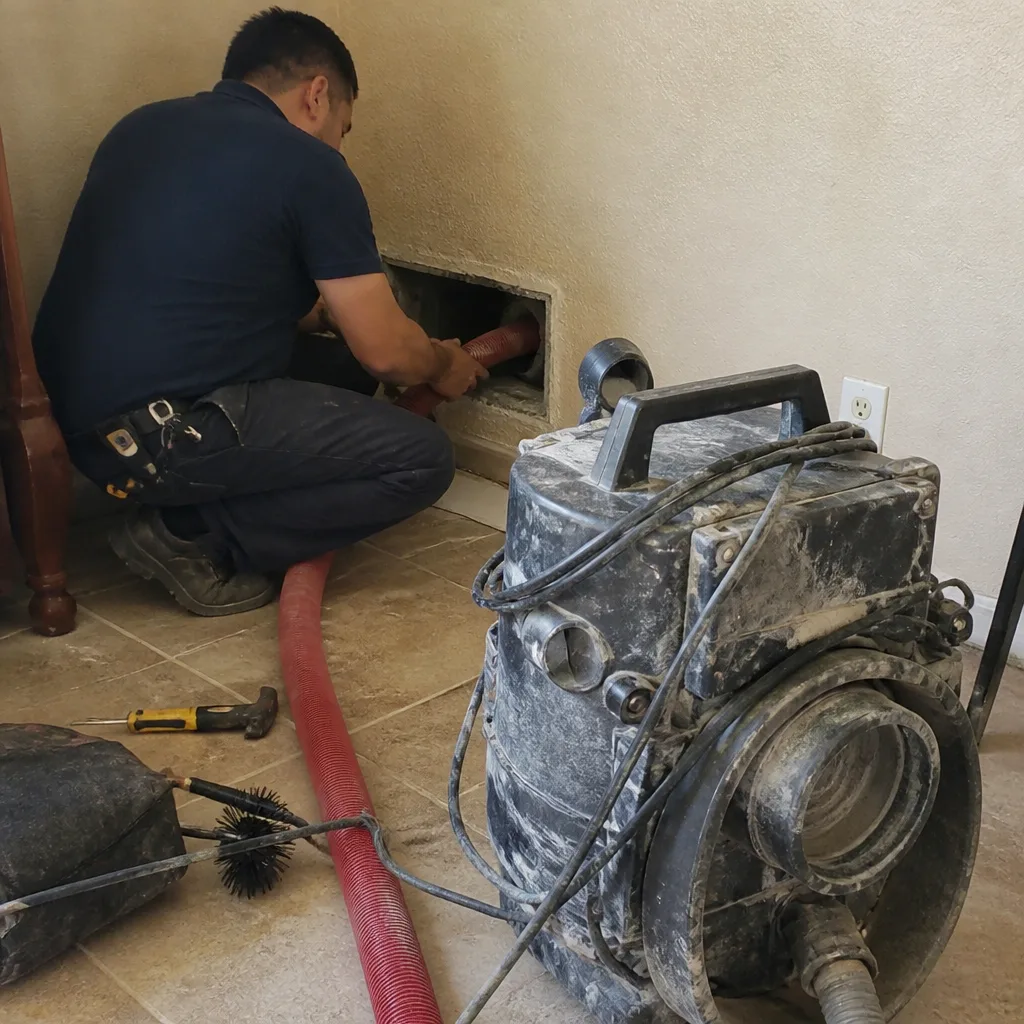 Before
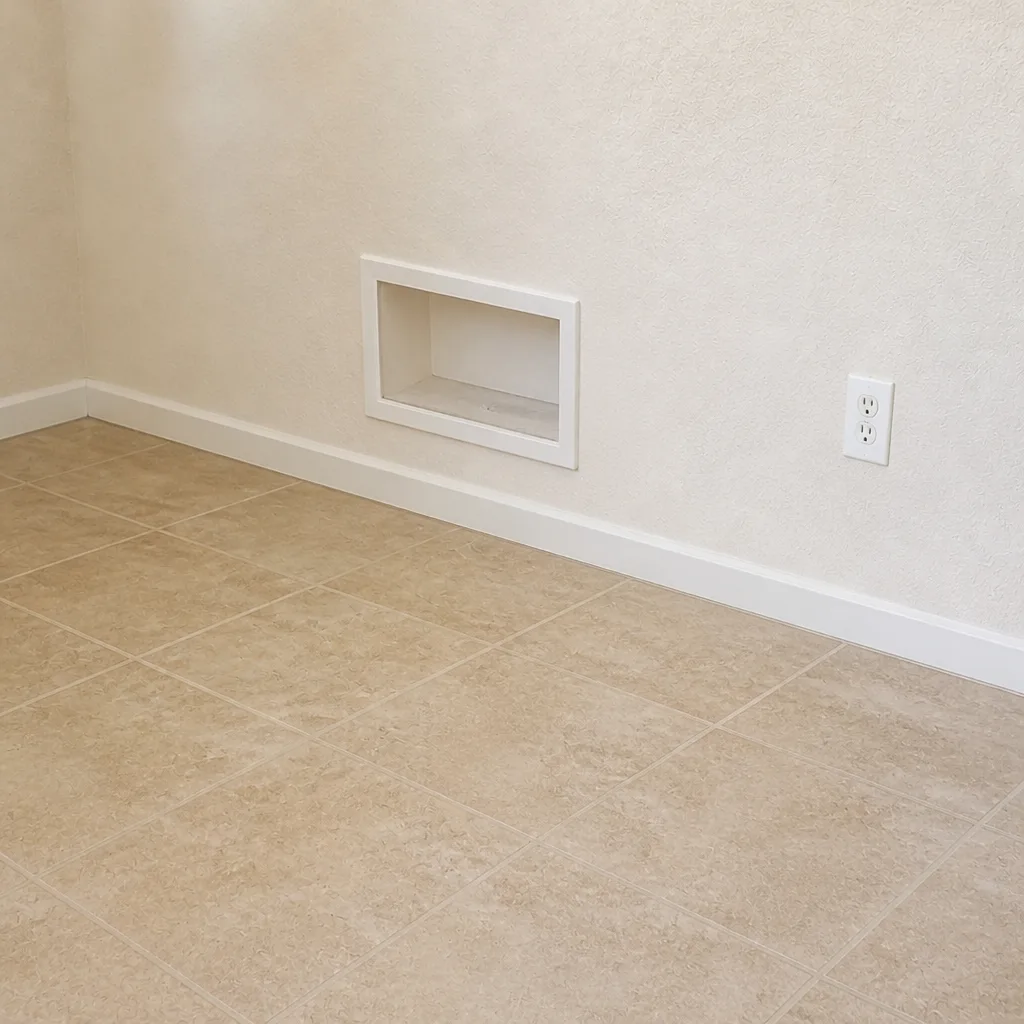 After
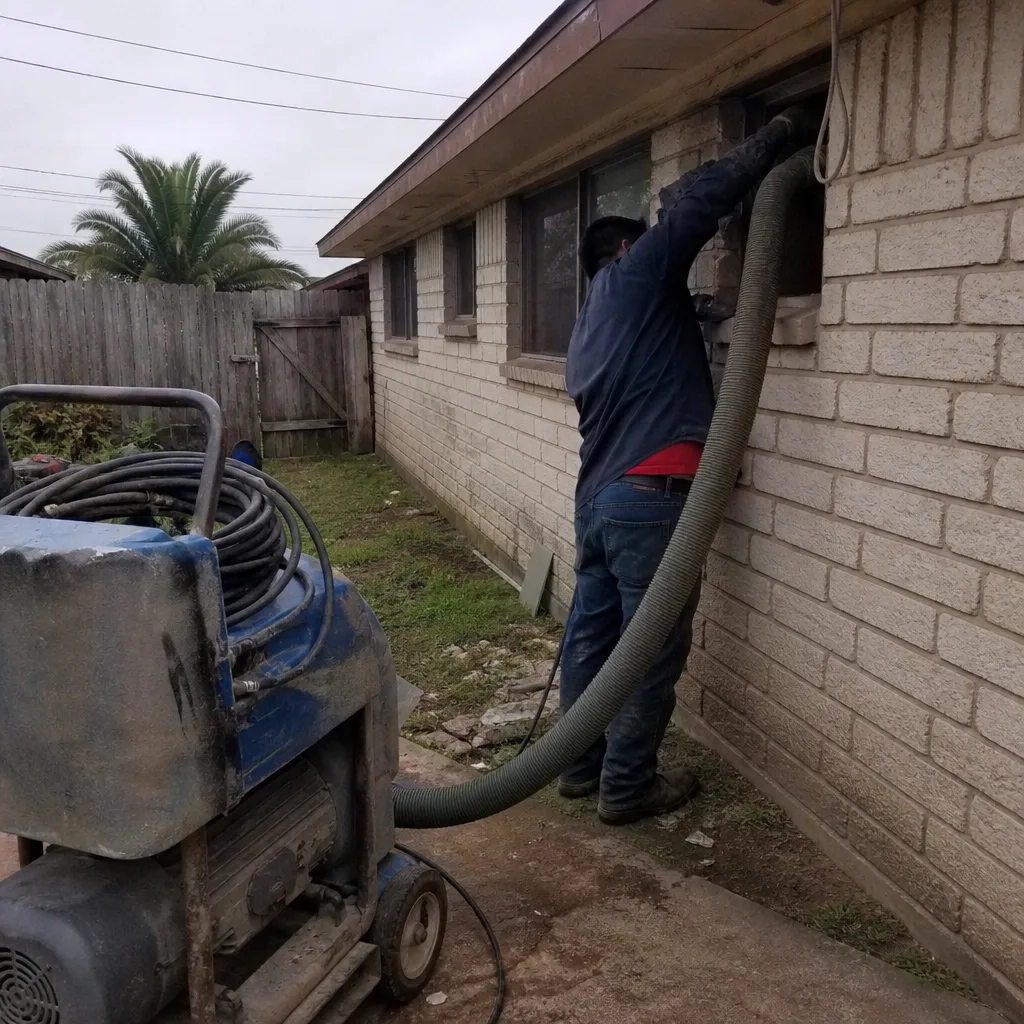 Before
 After
 Before
 After